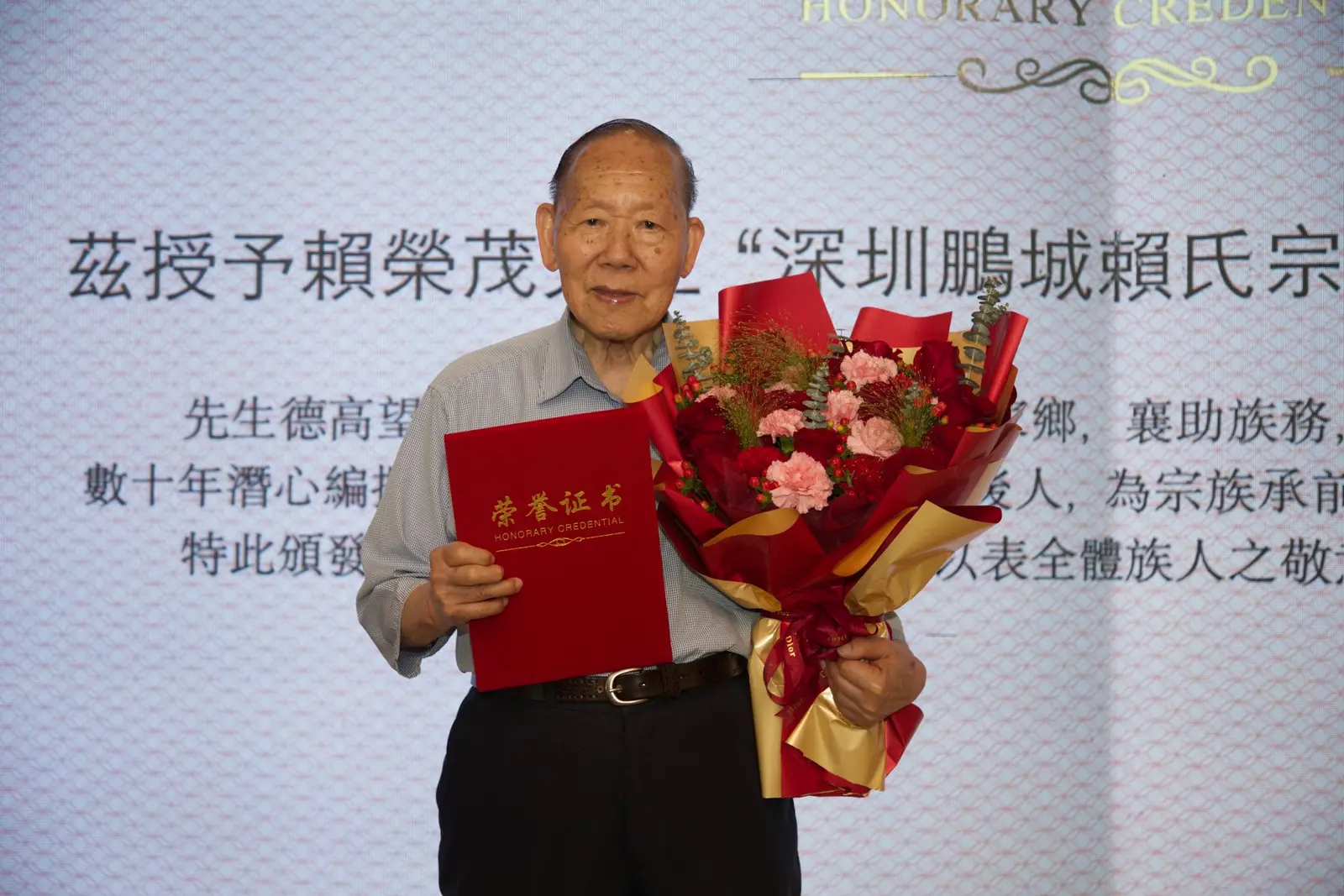
在鹏城赖氏宗亲会的大家庭里,有一位德高望重的长者。他是清代名将赖恩爵的第六代孙,是英国朴次茅斯华人协会的创始人之一,更是我们宗亲会的前任会长、终身名誉会长——赖荣茂先生。
从大鹏所城的将军第巷,到香港的维多利亚港,再到英国朴次茅斯的海滨城市,赖荣茂先生的一生,是一部海外游子心系故土、爱国爱乡的奋斗史,也是一部赖氏后人传承家风、弘扬祖德的家族史。
今天,我们谨以此文,向宗亲们讲述赖荣茂先生的故事,铭记他为宗亲会、为家族文化、为侨社事业所作出的卓越贡献。
01 所城出生,名将之后
"沿海所城,大鹏为最。"这是清嘉庆《新安县志》关于大鹏所城的一句描述。
在深圳大鹏所城南门右侧的赖府巷内,有一座辉煌气派的古建筑"振威将军第"——清代广东水师提督、振威将军赖恩爵的府邸,格外引人瞩目。
1839年(清道光十九年)9月4日,英国驻华商务监督义律率领军舰炮轰清军水师船和九龙炮台,时任大鹏营参将的赖恩爵率领官兵还击,取得了九龙海战的胜利。这是鸦片战争前中国军民抗击英国侵略的第一次海战,打响了近代中国反侵略的第一枪。
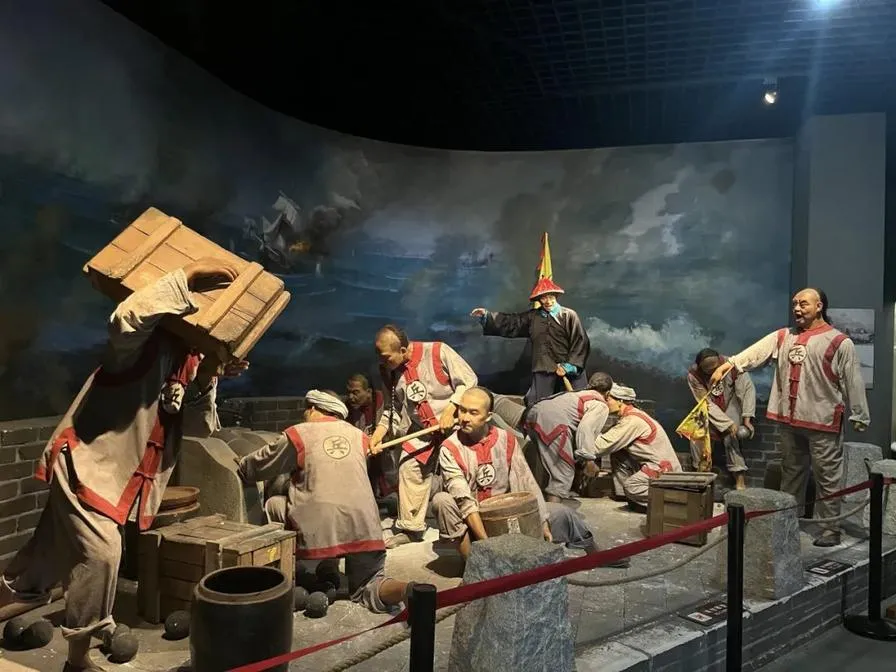
深圳博物馆内再现的九龙海战一幕
大鹏所城的赖氏家族是深圳历史上的名门望族,家族中曾经"三代出了五位将军",在中国历史上都属罕见,故有"宋朝杨家将、清代赖家帮"之美誉。
1931年9月,赖荣茂出生在大鹏所城西南角将军第巷(现址为大鹏所城将军第巷1号101)的一户人家里,系赖恩爵大儿子的后人。他是将门之后,身上流淌着先祖忠勇报国的热血。
02 少年孤苦,祖母抚养成人
然而,到赖荣茂父辈这一代,家族已经不再习武、入伍了。他的父亲赖六宜是一名"行船嘅(海员)",常年在远洋航行。
天有不测风云。赖六宜出远洋时在船上患病,30多岁就在美国纽约不幸去世,现还葬在纽约华人墓园里。父亲去世之后,母亲很快改嫁,从此再也没有音信。
"我们两兄弟很小就没有了父母,全靠老祖母抚养长大,跟老祖母的感情也非常好。"说起自己的祖母赖潘氏(潘瑞英),赖荣茂先生的声音总会变得有些哽咽,眼眶也湿润了起来。
在祖母的含辛茹苦抚养下,赖荣茂和哥哥赖荣启在大鹏所城里读完了高小。当时学校叫"鹏一中心小学",地址就在古城北门的太公庙(关帝庙)那边。后来被誉为"中国改革开放的最初实践者"的袁庚,在20世纪30年代末就曾在大鹏所城里教书育人,并曾担任过小学校长。
由祖母抚养的兄弟二人从小就很懂事,在校读书非常勤奋,学习成绩一直都名列前茅。如今,在深圳博物馆二楼"近代深圳展厅"里,收藏了赖荣茂在五年级上学期全级考第一名的成绩单,以及六年级第二学期3次模范生选举中全都荣获第一名的3张奖状。
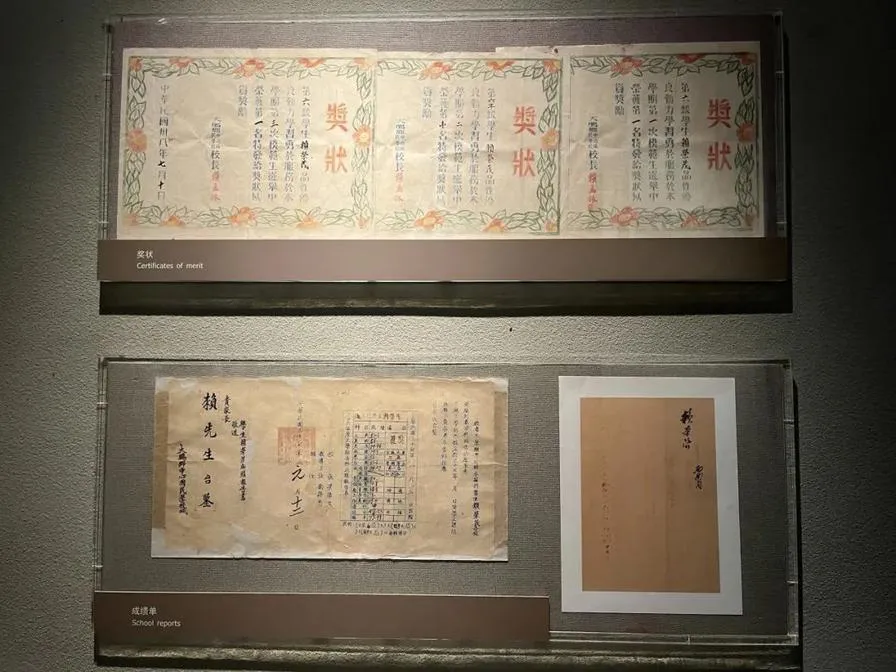
深圳博物馆内收藏的赖荣茂先生的奖状和成绩单
70多年前在大鹏所城里读书的赖荣茂,那可是妥妥的学霸,以及让人羡慕的"别人家的孩子"。这段在古城里读书成长的岁月,也为他日后的人生奠定了深厚的文化根基。
03 香港谋生,成家立业
1949年7月,赖荣茂和几个同学离开家乡大鹏,去了香港打工。"我们是在叠福那边搭火船(蒸汽轮船)离开的,坐了大概两个小时的船,就到了香港新界的大埔,然后再坐火车到了九龙油麻地。"
在香港,赖荣茂投靠的是堂叔赖六凯。赖六凯自小就在香港接受西式教育,精通英文,当时在九龙尖沙咀的海景酒店里做部长。在堂叔的介绍下,赖荣茂也顺利进入了海景酒店的茶水部打工。
"因为之前一直都在大鹏乡下,初到香港的我其实什么都不懂。"但在堂叔的关照下,他一边工作一边学英文,慢慢成长。
在海景酒店工作了几年之后,经朋友介绍,赖荣茂去了香港洋务工会的服务部工作,从售卖员转做书记员,负责收会费等事务。这段在工会工作的经历,为他日后在海外创办华人社团、服务侨社打下了重要基础。
1954年,赖荣茂申请从香港回到家乡大鹏结婚。"我老婆冼桂玲跟我同读一所小学,只是我年级比她高一点。"那个年代,女孩要耕田、做家务,读书的很少,因此能娶到这样的女子,赖荣茂感到非常幸运。
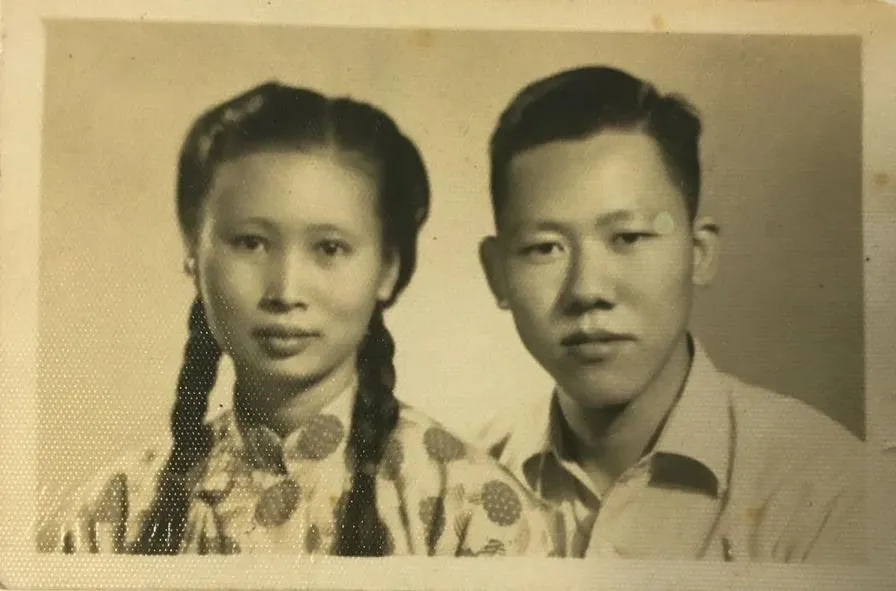
赖荣茂先生与妻子冼桂玲的结婚照(摄于1954年2月)
随后几年,两个女儿也在大鹏所城将军第巷的老屋陆续出生。到了1962年,赖荣茂申请妻子和二女儿一起去香港,但把大女儿赖坚贞继续留在了大鹏老家。
被问到为什么要将大女儿留在老家,赖荣茂无奈地回答:"因为乡下还有老祖母需要照顾。"——这就是赖氏后人的家风:孝老爱亲,重情重义。
在香港工作的那十几年很辛苦,要养家,还要交房租,但也正是在这一时期,他组建了自己的家庭,有了几个子女陆续出生,令他感到非常欣慰。
04 远赴英伦,服务侨社
1966年8月,因生活所迫,赖荣茂带着一种相当复杂的心情,去了英国的朴次茅斯,在一家中餐馆里打工。
一开始,是在餐馆里的水吧做冲茶等服务工作,但赖荣茂并不甘于此,坚持必须进厨房学习。"因为掌握了一些厨房工作的技能,就可以自己开快餐店了。大鹏当时很多人在英国都是做厨房工作的。"
一年之后,在同乡黄音(后来成为著名的荷兰侨领)的帮助下,赖荣茂在朴次茅斯开了一家外卖餐厅。"黄音是大鹏所城东南角人,我是西南角的,我们曾在同一所小学读书。他爸爸是做厨房的,他也比我早到英国。我当时其实没有多少钱,但他说,开餐馆你有多少钱就出多少钱,不够我给你垫。"——乡谊乡情,在异国他乡显得格外珍贵。
在朴次茅斯逐渐站稳脚跟之后,赖荣茂也在用实际行动来回馈社会。为了给华侨华人争取利益,也为了提升华人在朴次茅斯的社会地位,赖荣茂和一批志同道合的朋友在1980年6月正式成立了英国朴次茅斯华人协会,并于同年9月创办了朴次茅斯华人协会中文学校。
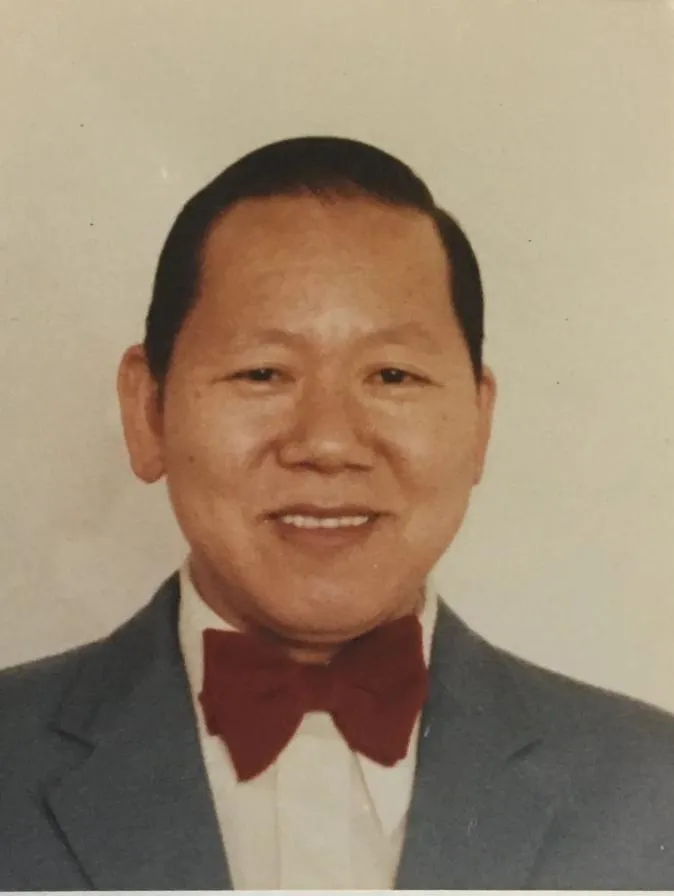
赖荣茂先生年轻时的照片(1983年摄于朴次茅斯)
由于之前曾经在香港的工会工作过,对社团事务比较熟悉,赖荣茂曾在华人协会里担任多届秘书长以及第八届的会长。协会章程的起草、修改以及会长演讲稿的撰写等很多工作,都是由他负责完成的。
"当然,修改会章不是我一个人决定的,一切都以协会的整体利益为重,不能夹杂着一点点个人私利。"赖荣茂先生始终这样说。
最初协会是没有固定会所的,都是租别人的地方来运作,直到1992年大家才下决心筹钱购买了现在的协会会所。"当时有些华侨有钱就捐得比较多,有的捐了5000英镑,我那时比较穷,但也捐了3000英镑,因为我是会里的骨干,在这件事上可不能落后于别人。"
如今,朴次茅斯华人协会在英国的华侨组织里,算是影响力比较大的。协会积极服务于当地华人社区,已经成为沟通政府和华人之间的桥梁。协会目前有400多位会员、20位执行委员,协会中文学校最高峰的时候学生有200多人,目前学生也有180名左右。
"在华人协会服务了四十几年,我从来没有从协会支取过一分钱,只是出钱出力,为华侨华人服务好,并尽量宣传好我们的国家政策。"赖荣茂先生说。
因为热心公益事业和服务社区,2019年5月,赖荣茂先生获得英国朴次茅斯市政府颁发的"荣誉市民"称号。
05 爱国行动,助力国宝回家
几个世纪以来,朴次茅斯一直都是英国皇家海军的主要基地之一。1900年6月17日,由英、法等国组成的八国联军攻陷天津的大沽炮台,悬挂于炮台上的大沽铁钟被英国士兵作为战利品掠夺走,并运回到英国,存放在朴次茅斯市的维多利亚公园内。从此,大沽铁钟开始了在朴次茅斯的100多年海外流浪生涯。
2003年,英国维多利亚艺术中心主任马可·刘易斯和中国留学生范辉偶然发现了铁钟。后来,在中英两国政府和朴次茅斯华人协会的多方努力下,2005年5月25日,英国政府通过了将大沽铁钟无偿返还中国的提案。
同年7月20日,大沽铁钟重新回到了故土。2006年,天津方面等比例复制了一口铁钟回赠给了朴次茅斯市,并悬挂在该市维多利亚公园内。2014年,大沽铁钟因其特殊意义入选成为国家一级文物,如今,铁钟真品收藏在天津大沽口炮台遗址博物馆内,并成为该博物馆的镇馆之宝。
回忆此事,赖荣茂先生自豪地说:"这是我们协会这些年以来做的众多爱国行动之一。"
为表示对华人协会多年来所作贡献的感谢及尊重,朴次茅斯市政府特别给予了协会一项极高的礼遇:在每年的中国春节、中国国庆节以及香港回归中国纪念日等重要时刻,都可以在当地的市政厅广场进行升五星红旗的仪式。
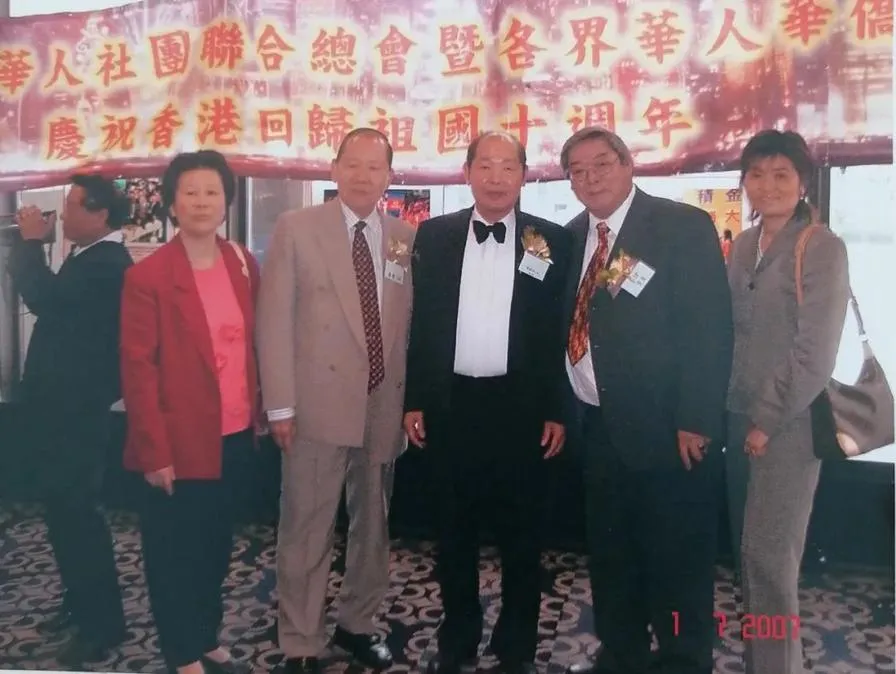
2007年7月1日,赖荣茂先生(右四)到伦敦参加全英华人侨团联合举办的庆祝香港回归祖国10周年活动
06 宗亲会奠基人,六年编修族谱
作为鹏城赖氏宗亲会的前任会长、终身名誉会长,赖荣茂先生对宗亲会的贡献,是怎么强调都不为过的。
他最重大的贡献,就是用六年时间,从1993年开始研究,到处搜集资料,访问还在世的老前辈,最终编纂出了一本原广东省宝安县《大鹏城赖氏世系简谱》。2014年,他又编出了一本《大鹏城赖氏敦厚堂简谱》。
"我是赖府的后代,我如果不去做,就很可能没有其他人会去编这个家谱了。"赖荣茂先生说。
这句话,道出了一位老宗亲对家族文化传承的深切责任感。在海外漂泊多年,他最牵挂的,始终是根——是大鹏所城的那座古城,是赖氏先祖的那段历史,是子孙后代不能断了的血脉渊源。
如今,大鹏新区博物馆内有不少介绍资料,引用的来源都是《大鹏城赖氏世系简谱》里的内容。这本简谱,不仅是赖氏宗亲寻根问祖的依据,更是研究深圳地方史、客家移民史、海防史的重要文献。
赖荣茂先生担任深圳鹏城赖氏宗亲理事会会长期间,始终以宗亲会为家,以宗亲福祉为念。他联络海内外赖氏宗亲,推动宗亲会的组织建设和文化建设,为宗亲会的发展奠定了坚实基础。他退休后,被宗亲会推举为终身名誉会长,这是全体宗亲对他最高的敬意和认可。
他不仅是宗亲会的老会长,更是我们赖氏家族文化的守护者和传承者。
07 重返大鹏,所城活字典
2023年是新安县(今深圳、香港所在地的旧称)建县450周年,2023年9月4日是九龙海战取得胜利184周年。当日,清代鸦片战争将领赖恩爵将军铜像在大鹏所城振威将军第落成揭幕。
铜像落成揭幕后一周,赖荣茂先生与弟弟赖荣平、女儿赖坚贞及其丈夫余锦培,一同回到了大鹏所城,站在先祖的铜像前合影留念。
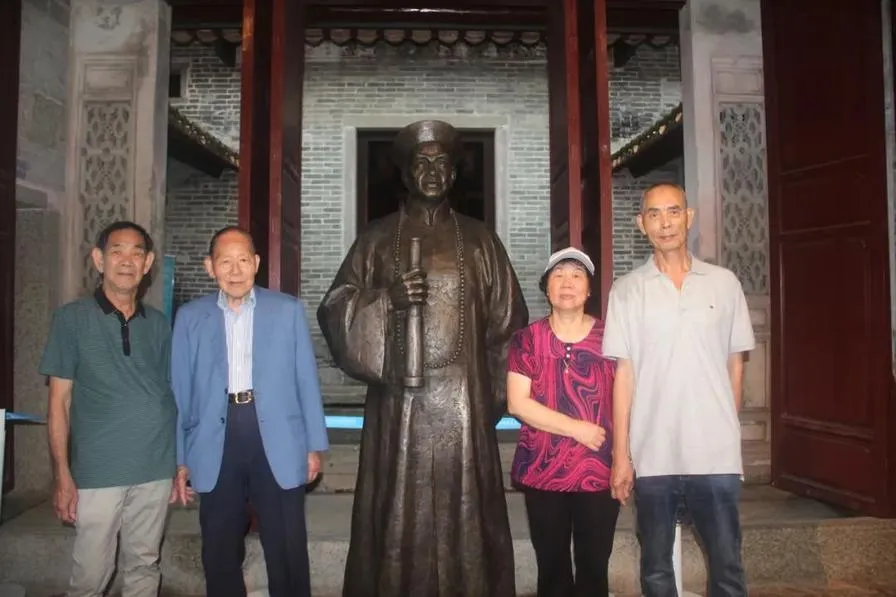
2023年9月,赖荣茂先生(左二)与家人在大鹏所城赖恩爵铜像前合影
当日下午,在振威将军第参观时,屋外突然下起了倾盆大雨。因为新冠疫情,有3年没有回家乡大鹏的赖荣茂先生突然感慨道:"真是'下雨天,留客天'啊!"
赖荣茂先生很早就离开了家乡,但跟所城众多的赖氏后人一样,不管走了多远,他始终心系大鹏,会经常回来看看这座建于明洪武廿七年(1394年)的古城。
虽然已经是90多岁高龄,腿脚有些不大灵便,但赖荣茂先生对过去的一些人和事记得很清楚,就像是一本大鹏所城的"活字典"。就连大鹏新区博物馆副馆长黄文德有新发现,遇到拿不准的地方,都要向赖荣茂这位前辈请教。
"我是在这里长大的,对这里的很多地方都记忆犹新。"赖荣茂先生动情地说,"而且我之前访问过很多所城里的老人和一些曾经在大鹏工作过的东江纵队老游击队队员,掌握了不少的一手资料。"
这次从海外回来,赖荣茂先生在大鹏所城选择下榻的民宿酒店,居然就是他20世纪80年代在所城新建的一座房屋(现产权已经出售给了别人)。"我爸爸是一个非常念旧的人,在自己旧屋住着,见到熟悉的场景,他会睡得更安稳一些。"女儿赖坚贞说。
这就是赖荣茂先生——一位从大鹏所城走出的将门之后,一位在海外漂泊却始终心系故土的游子,一位用六年时间为家族编修族谱的老宗亲,一位用一生践行"爱国爱乡、孝老爱亲"家风的长者。
08 宗亲会致敬
作为鹏城赖氏宗亲会的终身名誉会长,赖荣茂先生以他的一生,为我们诠释了什么是忠勇传家、耕读继世的赖氏家风。
从先祖赖恩爵将军在九龙海战中英勇抗敌,到赖荣茂先生在海外创办华人协会、服务侨社,再到他用六年时间编修族谱、传承家族文化——这就是赖氏家族一脉相承的精神血脉:
- 忠勇报国——先祖的英雄气概,代代相传;
- 孝老爱亲——祖母抚养成人,他以孝回报;
- 团结乡谊——在海外联络同乡,创办华人社团;
- 传承文化——六年编修族谱,守护家族根脉;
- 无私奉献——服务侨社四十余年,从不支取一分钱。
赖荣茂先生是我们全体赖氏宗亲的骄傲和榜样。他的故事,不仅是一个人的奋斗史,更是一部海外侨胞爱国爱乡的缩影,也是一部赖氏家族文化传承的生动教材。
今天,我们谨以此文,向赖荣茂先生致以最崇高的敬意。愿老会长健康长寿,愿赖氏家族枝繁叶茂,愿大鹏所城的历史文化在我们这一代人手中继续发扬光大。
In the big family of the Pengcheng Lai Clan Association, there is a highly respected elder. He is a sixth-generation descendant of the Qing dynasty general Lai Enjue, one of the founders of the Portsmouth Chinese Association in the UK, and the former President and Lifetime Honorary President of our clan association — Mr. Lai Rongmao.
From Generals' Mansion Lane in Dapeng Fortress, to Victoria Harbour in Hong Kong, and then to the seaside city of Portsmouth in England, Mr. Lai Rongmao's life is a history of an overseas wanderer devoted to his homeland — a story of patriotism and love of home — and also a family history of the Lai descendants carrying on the family tradition and promoting ancestral virtue.
Today, we tell his story to our clansmen, in remembrance of his outstanding contributions to the clan association, to family culture, and to the overseas Chinese community.
01 Born in the Fortress, a General's Descendant
"Of all the coastal fortress towns, Dapeng is the greatest." This is how the Jiaqing-era Xin'an County Gazetteer described Dapeng Fortress.
In Lai Mansion Lane, to the right of the south gate of Dapeng Fortress in Shenzhen, stands a splendid and imposing ancient building — the "Zhenwei General's Mansion", the residence of Lai Enjue, Admiral of the Guangdong Navy and Zhenwei General of the Qing dynasty, which attracts particular attention.
On 4 September 1839 (the 19th year of Daoguang), Elliott, the British Superintendent of Trade in China, led warships to bombard the Qing naval vessels and the Kowloon forts. Lai Enjue, then Colonel of the Dapeng Battalion, led his officers and men in a counter-attack and won the Battle of Kowloon. It was the first naval battle in which Chinese soldiers and civilians fought against British invasion before the Opium War, firing the first shot of modern China's resistance against aggression.
A re-enactment of the Battle of Kowloon in the Shenzhen Museum
The Lai family of Dapeng Fortress was a renowned family in Shenzhen's history — the family "produced five generals in three generations", a rarity in Chinese history, hence the saying "the Yang family generals of the Song dynasty, the Lai family legion of the Qing dynasty".
In September 1931, Lai Rongmao was born into a family in Generals' Mansion Lane at the southwest corner of Dapeng Fortress (now No. 101, Generals' Mansion Lane), as a descendant of Lai Enjue's eldest son. Born of a general's family, he carried the blood of loyalty and courage of his ancestors.
02 A Lonely Childhood, Raised by His Grandmother
By Rongmao's father's generation, however, the family no longer practised martial arts or joined the army. His father Lai Liuyi was a seaman, sailing the oceans all year round.
Misfortune struck. Lai Liuyi fell ill on a voyage and died in New York, USA, in his thirties; he is still buried in a Chinese cemetery in New York. After his father's death, his mother soon remarried and was never heard from again.
"My brother and I lost our parents when we were very young and were raised entirely by our grandmother; we were very close to her." Whenever he speaks of his grandmother Lai Pan-shi (Pan Ruiying), Mr. Lai Rongmao's voice chokes and his eyes moisten.
Under his grandmother's painstaking care, Lai Rongmao and his elder brother Lai Rongqi finished primary school in Dapeng Fortress. The school was then called "Pengyi Central Primary School", located near the Taigong Temple (Guandi Temple) by the north gate of the old city. Yuan Geng, later hailed as "the earliest practitioner of China's reform and opening-up", taught in Dapeng Fortress in the late 1930s and even served as the school's headmaster.
The two brothers raised by their grandmother were sensible from childhood, very diligent at school, and their grades were always among the best. Today, in the "Modern Shenzhen Exhibition Hall" on the second floor of the Shenzhen Museum are kept Lai Rongmao's report card — on which he ranked first in the whole grade in the first semester of Grade 5 — and three certificates for winning first place in all three model-student elections in the second semester of Grade 6.
The certificates and report card of Mr. Lai Rongmao kept in the Shenzhen Museum
Rongmao, studying in the old city more than seventy years ago, was a true top student — the enviable "child of other people's dreams". Those years of studying and growing up in the old city laid a deep cultural foundation for his later life.
03 Making a Living in Hong Kong, Starting a Family
In July 1949, Lai Rongmao and several classmates left their hometown Dapeng for Hong Kong to work. "We boarded a steamboat at Diefu and after about two hours reached Tai Po in the New Territories, then took the train to Yau Ma Tei, Kowloon."
In Hong Kong, Lai Rongmao turned to his cousin Lai Liukai, who had received a Western education in Hong Kong from childhood, was fluent in English, and was then a supervisor at the Harbour View Hotel in Tsim Sha Tsui, Kowloon. Through his cousin's introduction, Lai Rongmao joined the hotel's tea and pantry department.
"Having always lived in the Dapeng countryside, I actually knew nothing when I first arrived in Hong Kong." But under his cousin's care, he worked while learning English and gradually grew.
After several years at the Harbour View Hotel, through a friend's introduction Lai Rongmao went to work in the service department of the Hong Kong Overseas Chinese Labour Union, moving from salesman to clerk, responsible for collecting membership fees and other affairs. This union experience laid an important foundation for his later founding of Chinese associations overseas and serving the community.
In 1954, Lai Rongmao applied to return from Hong Kong to his hometown Dapeng to get married. "My wife Xian Guiling attended the same primary school as me, only I was a grade above her." In those days girls had to farm and do housework and few went to school, so he felt very lucky to marry such a woman.
The wedding photo of Mr. Lai Rongmao and his wife Xian Guiling (taken in February 1954)
In the following years, his two daughters were born one after another in the old house in Generals' Mansion Lane. In 1962, Lai Rongmao applied for his wife and second daughter to join him in Hong Kong, but kept his eldest daughter Lai Jianzhen in Dapeng.
Asked why he left his eldest daughter in the hometown, Lai Rongmao replied helplessly: "Because my old grandmother in the countryside needed care." — This is the family tradition of the Lai descendants: honour the old and love the family, valuing affection and loyalty.
Those dozen years working in Hong Kong were hard — supporting the family and paying rent — but it was also in this period that he founded his family and had several children, which comforted him greatly.
04 To England, Serving the Overseas Community
In August 1966, compelled by circumstances, Lai Rongmao went with rather mixed feelings to Portsmouth, England, and worked in a Chinese restaurant.
At first he served tea at the drink counter, but he was not content with that and insisted on learning in the kitchen. "Once you master some kitchen skills, you can open your own takeaway restaurant. Many people from Dapeng in England worked in kitchens."
A year later, with the help of his townsman Huang Yin (later a renowned overseas Chinese leader in the Netherlands), Lai Rongmao opened a takeaway restaurant in Portsmouth. "Huang Yin was from the southeast corner of Dapeng Fortress and I from the southwest; we studied in the same primary school. His father was a kitchen worker and he arrived in England earlier than me. I didn't have much money then, but he said: put in whatever you have for the restaurant, and I'll advance the rest." — The bond of fellow townsmen is especially precious in a foreign land.
After gradually gaining a foothold in Portsmouth, Lai Rongmao repaid society with practical actions. To defend the interests of overseas Chinese and raise their social standing in Portsmouth, Lai Rongmao and a group of like-minded friends formally founded the Portsmouth Chinese Association in June 1980, and in September of the same year founded its Chinese School.
A photo of Mr. Lai Rongmao in his youth (taken in Portsmouth, 1983)
Having worked in a union in Hong Kong, he was familiar with association affairs, and served the Chinese Association as secretary-general for several terms and as its eighth President. Much of the work — drafting and revising the association's constitution, writing the President's speeches — was done by him.
"Of course, revising the constitution was not my decision alone; everything was subordinate to the overall interests of the association, with not a trace of personal gain." So Mr. Lai Rongmao always said.
At first the association had no fixed premises and rented places to operate, until 1992 when everyone resolved to raise money to buy the current premises. "Some wealthy overseas Chinese donated more — some gave 5,000 pounds. I was rather poor then, but I still donated 3,000 pounds, because as a core member I could not fall behind others."
Today, the Portsmouth Chinese Association is among the more influential Chinese organisations in the UK. Actively serving the local Chinese community, it has become a bridge between the government and the Chinese. It has over 400 members and 20 executive committee members; its Chinese School once peaked at more than 200 students and now has about 180.
"In over forty years serving the association, I have never taken a single penny from it — only giving money and effort, serving the overseas Chinese well and promoting our country's policies as best I could," said Mr. Lai Rongmao.
For his enthusiastic public welfare and community service, in May 2019 Mr. Lai Rongmao received the title of "Honorary Citizen" from the Portsmouth City Council.
05 Patriotic Actions: Helping a National Treasure Home
For centuries, Portsmouth had been one of the main bases of the British Royal Navy. On 17 June 1900, the Eight-Nation Alliance formed by Britain, France and others captured the Dagu Forts at Tianjin. The iron bell hanging on the fort was looted by British soldiers as war booty and taken back to England, placed in Victoria Park in the city of Portsmouth. Thus began the iron bell's more than 100 years of wandering overseas.
In 2003, Mark Lewis, director of the Victoria Art Centre in England, and the Chinese student Fan Hui accidentally discovered the bell. Later, through the joint efforts of the Chinese and British governments and the Portsmouth Chinese Association, on 25 May 2005 the British government passed the proposal to return the Dagu Bell to China without compensation.
On 20 July the same year, the Dagu Bell returned to its homeland. In 2006, Tianjin cast an identical replica of the bell and presented it to Portsmouth, where it hangs in Victoria Park. In 2014, the Dagu Bell was designated a National First-Class Cultural Relic for its special significance; today the original is kept in the Tianjin Dagu Forts Museum as its prize treasure.
Recalling this, Mr. Lai Rongmao said proudly: "This is one of the many patriotic actions our association has taken over the years."
To express its gratitude and respect for the association's contributions, the Portsmouth City Council granted it a very high honour: on important occasions such as the Chinese Spring Festival, China's National Day and the anniversary of Hong Kong's return, the association may hold a flag-raising ceremony of the five-star red flag on the plaza of the City Hall.
On 1 July 2007, Mr. Lai Rongmao (fourth from right) attended in London the celebration of the 10th anniversary of Hong Kong's return, jointly held by Chinese associations across the UK
06 Founder of the Clan Association, Six Years Compiling the Genealogy
As former President and Lifetime Honorary President of the Pengcheng Lai Clan Association, Mr. Lai Rongmao's contributions can never be overstated.
His greatest contribution was the six years, beginning in 1993, spent researching, collecting materials everywhere and visiting surviving elders, finally compiling the "Brief Genealogy of the Lai Clan of Dapeng City, Bao'an County, Guangdong". In 2014 he compiled another volume, the "Brief Genealogy of the Dunhou Hall of the Lai Clan of Dapeng City".
"I am a descendant of the Lai Mansion. If I don't do it, probably no one else would compile this genealogy," said Mr. Lai Rongmao.
This sentence expresses an elder clansman's deep sense of responsibility for family cultural heritage. After wandering overseas for years, what he cared about most was always the root — the old fortress of Dapeng, the history of the Lai ancestors, the bloodline that must not be broken for future generations.
Today many introductory materials in the Dapeng New District Museum cite the "Brief Genealogy of the Lai Clan of Dapeng City". This genealogy is not only the basis for Lai clansmen to seek their roots, but also important literature for studying Shenzhen's local history, the history of Hakka migration, and coastal defence history.
During his tenure as President of the Shenzhen Pengcheng Lai Clan Council, Mr. Lai Rongmao always took the association as his home and the clansmen's welfare to heart. He contacted Lai clansmen at home and abroad, promoted the association's organisational and cultural development, and laid a solid foundation for its growth. After retirement, he was elected by the association as Lifetime Honorary President — the highest respect and recognition from all clansmen.
He is not only the association's old President, but also the guardian and inheritor of our Lai family culture.
07 Return to Dapeng: The Fortress's Living Dictionary
2023 marked the 450th anniversary of the founding of Xin'an County (the old name of today's Shenzhen and Hong Kong), and 4 September 2023 was the 184th anniversary of the victory of the Battle of Kowloon. On that day, the bronze statue of General Lai Enjue, hero of the Opium War era, was unveiled at the Zhenwei General's Mansion in Dapeng Fortress.
A week after the unveiling, Mr. Lai Rongmao returned to Dapeng Fortress with his younger brother Lai Rongping, his daughter Lai Jianzhen and her husband Yu Jinpei, and took a group photo before the bronze statue of their ancestor.
In September 2023, Mr. Lai Rongmao (second from left) and his family took a group photo before the bronze statue of Lai Enjue in Dapeng Fortress
That afternoon, while visiting the Zhenwei General's Mansion, a sudden downpour fell outside. Having not returned to Dapeng for three years because of the pandemic, Mr. Lai Rongmao exclaimed: "It's truly 'a rainy day, a day for keeping guests'!"
Though Mr. Lai Rongmao left his hometown long ago, like so many Lai descendants of the fortress, no matter how far he went his heart always remained with Dapeng, and he often returns to see this old city built in the 27th year of the Hongwu reign of the Ming dynasty (1394).
Though already in his nineties and somewhat unsteady on his legs, Mr. Lai Rongmao remembers the people and events of the past clearly, just like a "living dictionary" of Dapeng Fortress. Even Huang Wende, deputy curator of the Dapeng New District Museum, consults this elder whenever he is uncertain about new discoveries.
"I grew up here and remember many places vividly," said Mr. Lai Rongmao with feeling. "Moreover, I previously interviewed many elders in the fortress and some old East River Column guerrillas who once worked in Dapeng, so I hold a great deal of first-hand material."
This time on his return from overseas, the guesthouse Mr. Lai Rongmao chose to stay in at Dapeng Fortress was, remarkably, a house he himself had built in the old city in the 1980s (the property has since been sold). "My father is a very nostalgic man; staying in his old house and seeing familiar scenes, he sleeps more soundly," said his daughter Lai Jianzhen.
This is Mr. Lai Rongmao — a descendant of generals who walked out of Dapeng Fortress, a wanderer overseas whose heart never left his homeland, an elder clansman who spent six years compiling the family genealogy, and an elder who practised the family tradition of "patriotism and love of home, honouring the old and cherishing the family" all his life.
08 Tribute from the Clan Association
As Lifetime Honorary President of the Pengcheng Lai Clan Association, Mr. Lai Rongmao has shown us through his life what the Lai family tradition of "loyalty and courage passed down, farming and studying carried forward" means.
From ancestor General Lai Enjue's heroic resistance in the Battle of Kowloon, to Mr. Lai Rongmao's founding of the Chinese association overseas and his service to the community, and then his six years compiling the genealogy and carrying on family culture — this is the spiritual bloodline of the Lai family, passed down in one continuous line:
- Loyalty and courage to the country — the heroic spirit of the ancestors, passed down from generation to generation;
- Honouring the old and loving the family — raised by his grandmother, he repaid her with filial devotion;
- Unity and fellowship — uniting fellow townsmen overseas and founding Chinese associations;
- Carrying on the culture — six years compiling the genealogy, guarding the family's roots;
- Selfless dedication — serving the overseas community for over forty years, never taking a penny.
Mr. Lai Rongmao is the pride and role model of all our Lai clansmen. His story is not only one man's history of striving, but also a miniature of overseas Chinese patriots' love of country and home, and a vivid textbook of the Lai family's cultural heritage.
Today we offer our highest respect to Mr. Lai Rongmao. May the old President enjoy health and longevity; may the Lai family flourish; and may the history and culture of Dapeng Fortress continue to shine in the hands of our generation.