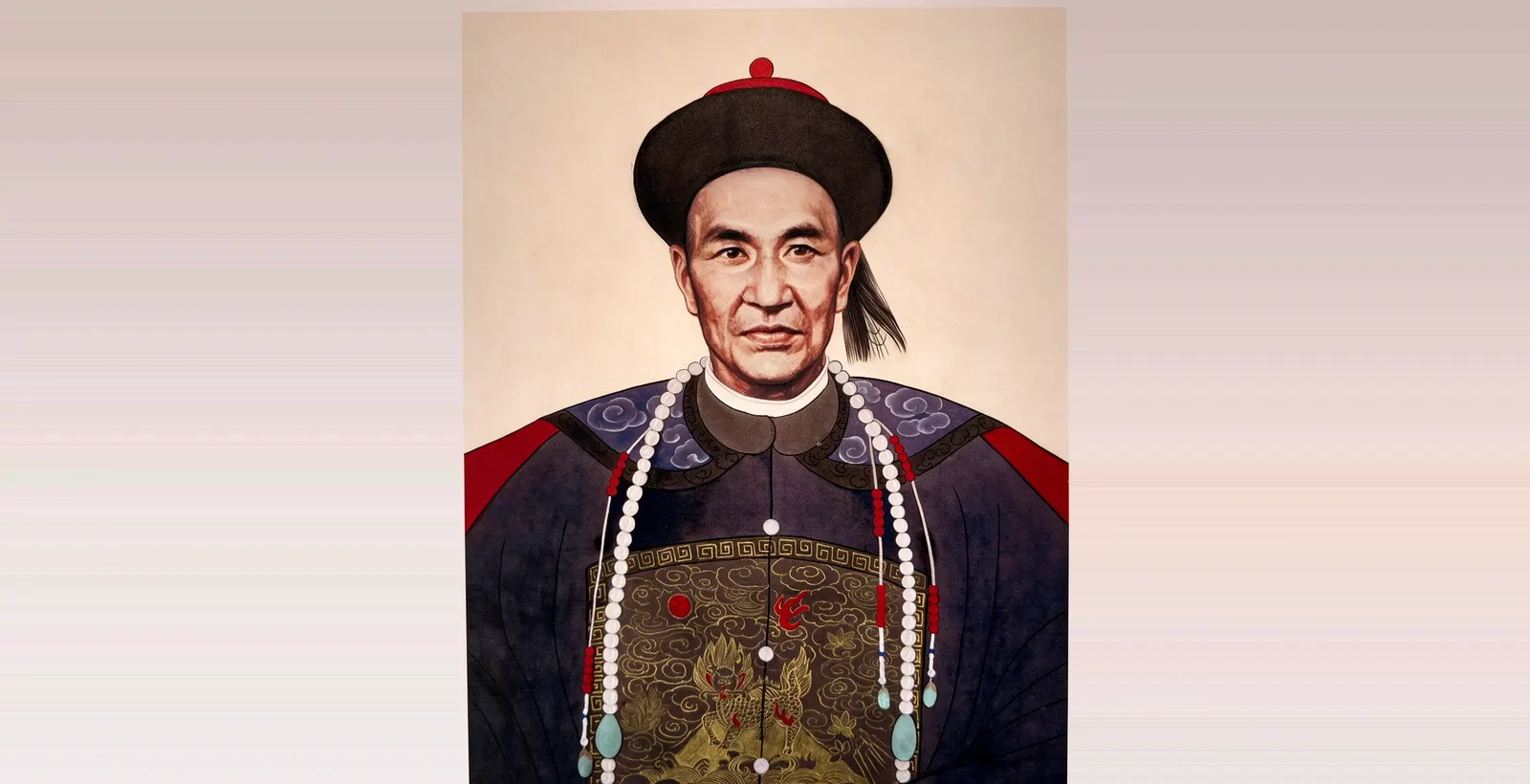
公元1839年9月4日,黄昏时分,九龙湾的海面上气氛紧绷到了极点。
五艘英国舰船横在湾口,炮口直指岸边。指挥舰"路易莎号"上,英国驻华商务监督义律正等着一个答复——他要用"求食"做幌子,逼清军让出这片海面。
站在九龙炮台的,是一位四十三岁的清军参将。他面容黝黑,目光如铁,已经在这片海域巡防了二十年。他没有退让,也没有多说一句话。
当英舰率先开炮的那一刻,这位参将拔出腰刀,声如洪钟:
"开炮——"
这一声令下,九龙炮台的岸炮齐鸣,清军三艘战船同时开火。炮弹如雨点般砸向"路易莎号"主桅,十九发炮弹接连命中,舰身倾斜,英军水兵纷纷落水。
这场激战持续了四个多小时,最终以英军败退告终。
这位参将,就是赖恩爵。
这一仗,史称"九龙海战"。它打响了鸦片战争的第一枪,也是中国近代史上中国军队与西方殖民者的第一次海上正面交锋。
从这一天起,赖恩爵的名字,被永远刻进了中国近代史的开篇。
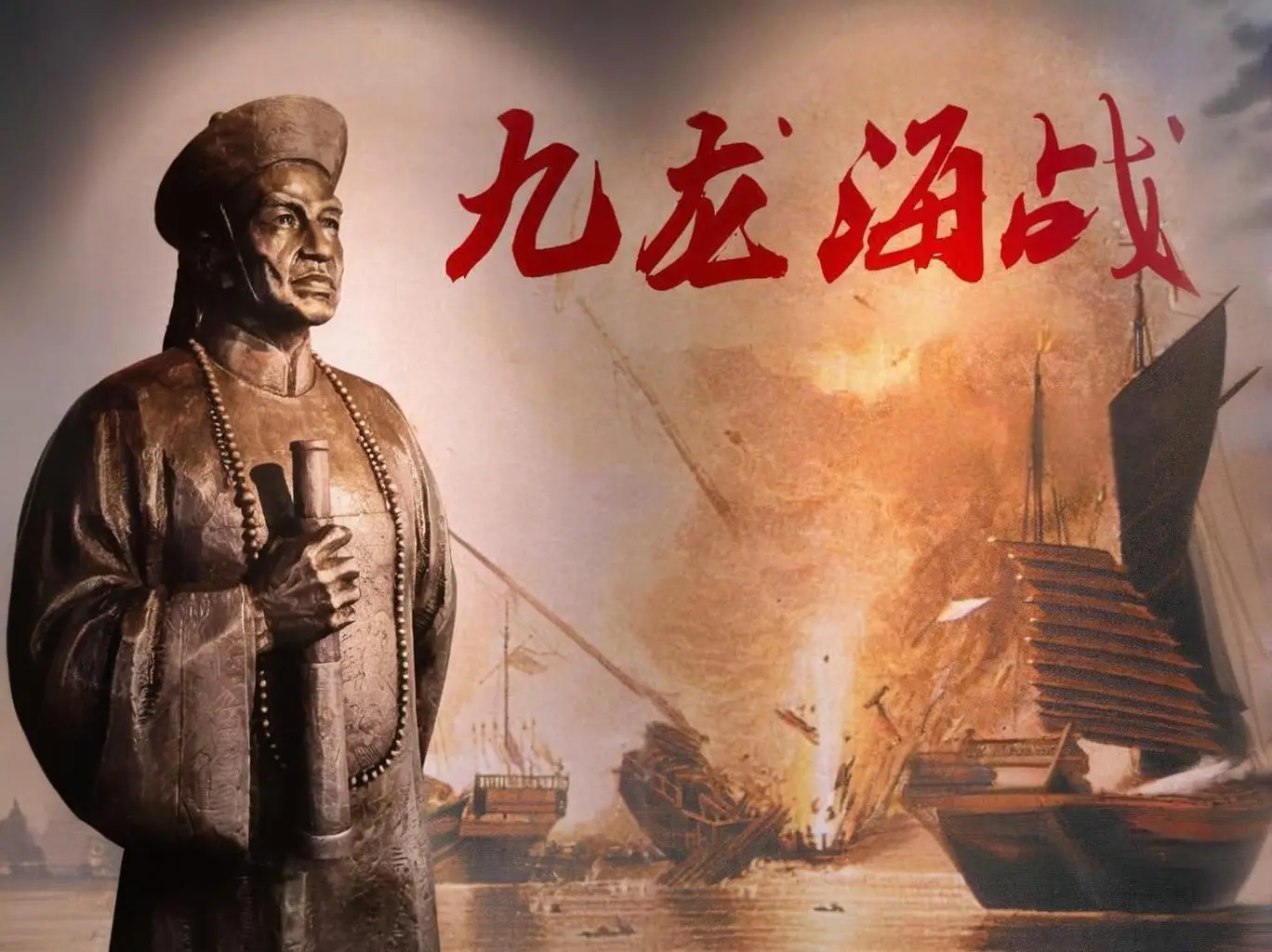
一、将星升起在大鹏湾
将军其人
赖恩爵(1795—1848),字简廷,广东新安县大鹏所城人,今天的深圳市龙岗区大鹏街道鹏城村。他出身客家,祖籍广东永安县——也就是今天河源市紫金县义容镇甘棠村。
他生在一个武将世家。清代大鹏赖氏,"三代五将"的名号响彻岭南,时人有谚:"宋有杨家将,清有赖家帮。"从普通兵士到广东水师提督,他用了整整二十五年;从把总到从一品的封疆大吏,他凭的是一场又一场实打实的战功。
他一生历经大小战斗三十六次,未尝一败。
九龙海战,他是指挥者;官涌之战,他是六战六捷的主帅。后来,他官至广东水师提督,诰封振威将军,御赐红顶戴花翎。
但就是这样一位百战名将,最终却在忧愤中离世。
公元1842年,《南京条约》签订,香港岛被割让给英国。消息传到大鹏,赖恩爵正在病中。他闻讯后挣扎着坐起,面朝北方,久久不语。
从此,他一病不起。
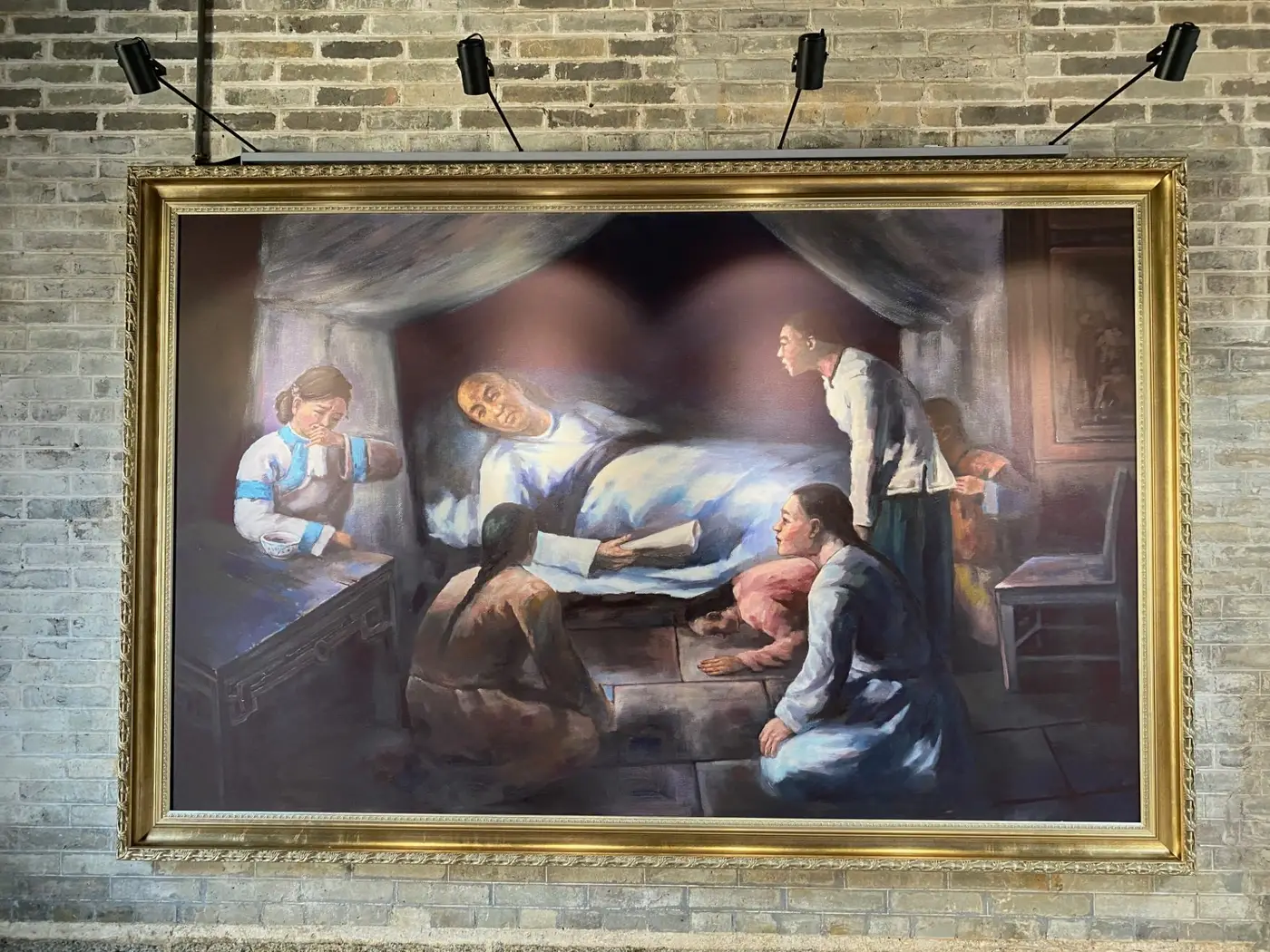
临终前,他把子孙叫到床前,留下一句话:
"吾忧朝廷腐败而忧,吾乐收回香港而乐。"
他还嘱托家人,将御赐龙袍传下去——传给将来能为收复香港出力的后辈。
那一年,是公元1848年。将军享年五十三岁。
他没有等到那一天。
但他的后人等到了。
1997年6月21日,香港回归前九天,散居世界各地的百余名赖氏后人回到大鹏所城,在振威将军第挂起一块木牌,上书四个大字:
"还我祖愿。"
九天之后,香港回归祖国。将军跨越一个半世纪的遗愿,终得实现。
二、三代五将:将门是怎样炼成的
从竹篾匠到武举人
大鹏赖氏的先祖,是周文王之子叔颖公,以国为氏,郡望颍川。历经数千年南迁,到明代时,赖氏一支落籍广东河源紫金。
清雍正九年(1731年),一个叫赖吾彪的赖氏后人,从紫金甘棠村迁居大鹏所城乌涌村。他以竹篾手艺为生,是大鹏赖氏的一世祖。
那时候,没有人会想到,这个编竹篾的手艺人,日后会繁衍出一个"三代五将"的武将世家。
赖吾彪三代单传,日子过得清苦。直到第三代,出了一个叫赖世超的人。
赖世超(1752—1832),生于乾隆十七年。他原本读书,却在乾隆四十年(1775年)弃文从武,考取了武举人。
这一步,是赖家命运的转折点。
赖世超后来官至广东琼州镇总兵,封武功将军(从二品),道光年间还当过闽粤两省的武举考官。
但真正奠定赖家家风的,是他的妻子——刘氏。
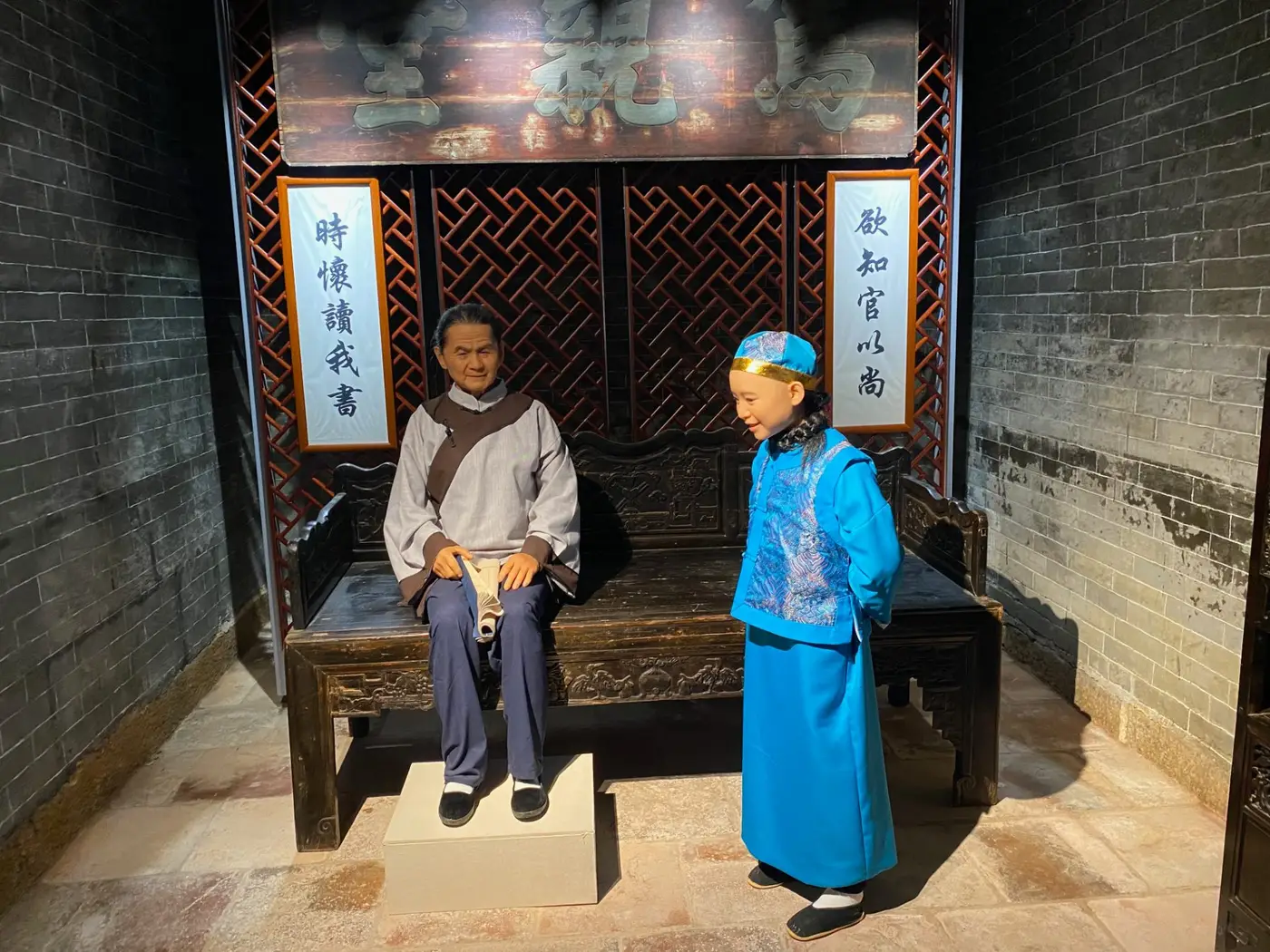
刘氏出身名门,知书达理。她自己编蒙学教材,亲自教子孙读书。她对赖家的要求只有八个字:
"爱国、清廉、智勇。"
这八个字,后来成了赖家代代相传的家风。族人尊她为"赖太母",在大鹏所城至今还留着她的传说。
五代将军,满门忠烈
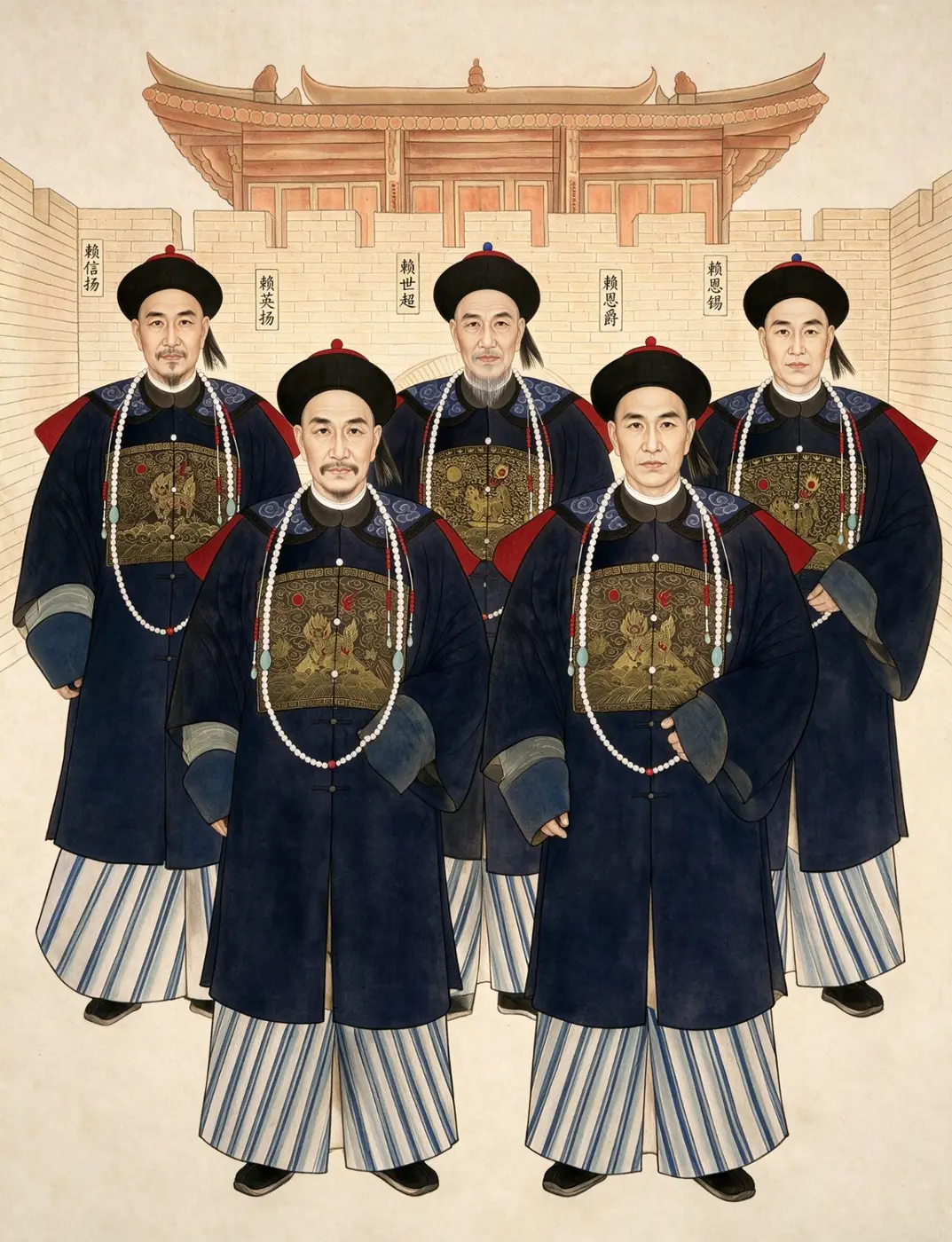
自赖世超起,赖氏三代人,出了五位将军。
品级之高、数量之多,在整个清代岭南都找不出第二家。
| 姓名 | 辈分 | 最高官职 | 封爵品级 |
|---|---|---|---|
| 赖世超 | 第三代(祖) | 广东琼州镇总兵 | 武功将军,从二品 |
| 赖英扬 | 第四代(父) | 浙江定海镇总兵 | 振威将军,从一品 |
| 赖信扬 | 第四代(叔) | 福建水师提督 | 建威将军,正一品 |
| 赖恩爵 | 第五代(子) | 广东水师提督 | 振威将军,从一品 |
| 赖恩锡 | 第五代(堂弟) | 福建晋江镇总兵 | 武功将军,从二品 |
赖英扬是赖恩爵的生父,字虎臣。他一生转战广东东西南海防,督造镇远、大虎炮台,官至浙江定海镇总兵。1840年病逝于家乡。
赖信扬是赖世超的第三子。他因为与赖恩爵任职回避,调到福建,后来官至福建水师提督。
他是目前深圳发现的清代品级最高的武将——正一品。
家风如刀,刻骨铭心
赖恩爵小时候,是祖母刘氏亲自教出来的。
他读《三字经》《弟子规》《朱子家训》,也读赖家祖传的两份家训。
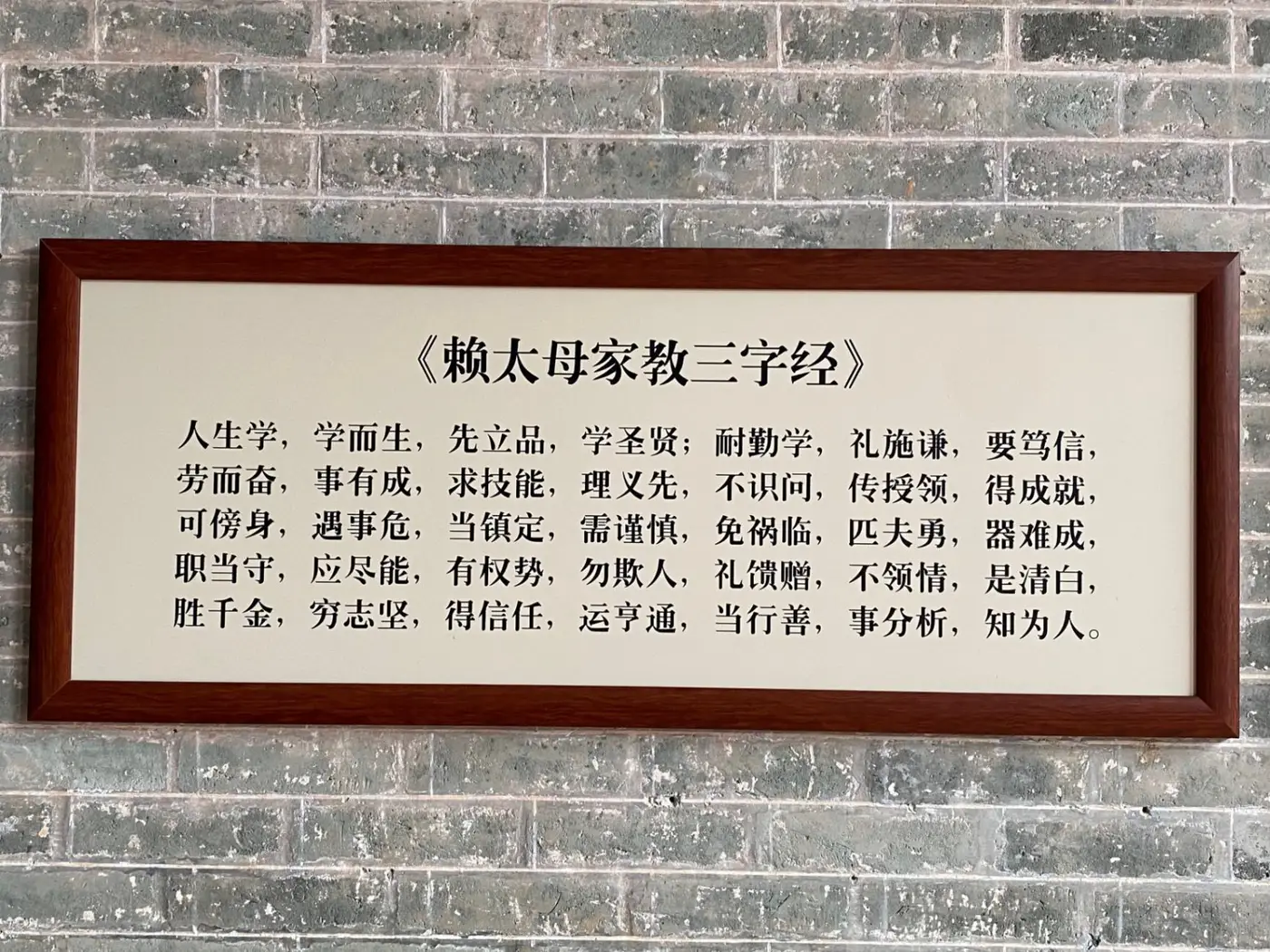
一份叫《赖太母家教三字经》,讲的是蒙学立品、勤学慎行;
另一份叫《受训须知》,讲的是为官之道。
《受训须知》里有两句话,赖恩爵记了一辈子:
"岗不离守,守不离纲。"
"有勇有谋,事预则立。"
祖训里还有一句话:
"愿为官者清且廉,为武者敢于死国。"
这十六个字,刻进了赖恩爵的骨子里。
他后来打仗,守的是"岗";他做官,守的是"纲";他面对英国人,守的是"国"。
三、从底层兵到水师提督
二十五年,一步一个血印
嘉庆二十四年(1819年),二十四岁的赖恩爵跟着父亲赖英扬去阳江从军。
他从最低等的兵士做起。
那时候的广东沿海,海盗猖獗,鸦片走私泛滥。赖恩爵的任务,就是在茫茫大海上巡防、缉捕、作战。
这一干,就是近二十年。
他历任把总、千总、守备、都司、游击……一个台阶一个台阶地往上走。每升一级,都是拿战功换的。
二十年的海上生涯,让他把粤洋的每一片水域、每一处暗礁、每一股洋流,都刻进了脑子里。
后来林则徐说他"最熟悉外洋情形"——这六个字,是二十年生死搏杀换来的。
道光十八年(1838年),四十三岁的赖恩爵补授海门营参将,正式跻身高级军官行列。
这一年,他还不知道,一场改变中国历史的大风暴,正在海面上酝酿。
林则徐的第一道防线
道光十九年(1839年)三月,赖恩爵调任大鹏营参将。
他负责的防区,是大鹏湾至九龙、香港一带四百余里洋面。
这是中英冲突的最前沿。
钦差大臣林则徐到广东禁烟后,赖恩爵成了他禁烟抗英政策最坚定的一线执行者。
他率水师巡逻珠江口与香港海域,封锁海岸,查缉鸦片走私船。
1839年7月,发生了一件事——林维喜事件。
一批英国水手在九龙尖沙咀村酗酒闹事,殴打村民,村民林维喜伤重不治。
林则徐要求英国驻华商务监督义律交出凶手,接受中国法律审判。
义律拒绝了。
他在英国军舰上自行审讯,只罚了点款、关了几天就了事。
这是对中国司法主权的公然侵犯。
林则徐大怒,下令断绝澳门英国人的食物与淡水供应,将他们驱逐至香港外海。
赖恩爵奉命率水师进驻九龙湾,执行封锁任务。
双方对峙,一触即发。
九龙海战:鸦片战争第一枪
道光十九年七月二十七日——公元1839年9月4日下午。
义律坐不住了。
他率领"窝拉疑号""海阿新号""路易莎号""剑桥号""珍珠号"五艘舰船,驶近九龙湾。
他派翻译郭士立向赖恩爵递交文书,说要"求食"。
交涉还没结果,英舰就率先开炮了。
炮弹呼啸着砸向清军水师船和九龙炮台。
赖恩爵临危不乱。
他当即下令:奋起还击!
他指挥三艘水师战船,配合九龙炮台岸防炮,集中火力轰击英军指挥舰"路易莎号"。
激战中,清军十九发炮弹连续击中"路易莎号"主桅。
舰身倾斜。英军水兵纷纷落水。
义律试图调"窝拉疑号"等大型战舰增援,但风向不利,风帆战舰无法驶入湾内,只能在外围远距离炮击。
战斗持续了四五个小时。
最终,英军不支,败退至尖沙咀海面。
战果:
- 清军:阵亡2人,重伤2人,轻伤4人,战船略有损坏。
- 英军:清方战报记载击毙30余人,击沉双桅帆船1艘、舢板2艘及吕宋趸船1艘,击断"剑桥号"船长道格拉斯手腕。英方官方档案承认至少2人阵亡、多人受伤。据大鹏新区博物馆史料,仅战后海面捞起的英军尸体即有17具。
这一仗,是鸦片战争的正式开端。
它是中国近代史上中国军队与西方殖民者的第一次海上武装冲突。
它打响了中华民族抗击外来侵略的第一枪。
消息传到北京,道光帝大喜过望,朱批四个字:
"可嘉之至。"
赖恩爵一战成名。
他获赐"呼尔察图巴图鲁"勇号——满语"勇士"的意思,升授副将。
官涌之战:十天六捷
九龙海战之后,英军不甘心。
他们认为尖沙咀以北的官涌山炮台,是他们盘踞香港海面的最大威胁。
1839年11月,十天之内,英军连续发动六次大规模进攻。
史称"官涌之战"。
广东水师提督关天培深知此地战略价值,立即增派兵力与火炮,命赖恩爵等将领统一布防,兵分五路迎敌。
六战六捷:
- 11月4日夜:英舰排列海面仰攻官涌营盘,清军居高临下发炮还击,击伤英舰多艘,英军首轮进攻即告失败。
- 11月8日:英舰正面炮击牵制,同时派舢板载兵从侧面包抄,百余名英军抢上山岗。把总刘明辉率众截击,击伤英军数十人,将其赶下山崖。
- 11月9日:英军在胡椒角开炮试探虚实,游击德连用大炮、抬炮齐射,英舰被击中后仓皇逃窜。
- 11月11日晚:清军按五个山梁分五路主动出击,大炮齐发轰击英舰锚地,英军猝不及防,连夜拔锚逃窜。
- 11月13日下午:英舰再次纠集力量来犯,清军五路大炮叠轰,再次重创英军,将其彻底逐出尖沙咀海面。
官涌之战,是鸦片战争初期清军少有的连续胜利。
赖恩爵作为核心指挥官之一,以灵活的战术与坚定的意志,守住了九龙至大鹏的海防侧翼,与虎门主防线形成犄角之势。
战后,林则徐、关天培联名上奏保举,称赖恩爵"最熟悉外洋情形""最为奋勇"。
这八个字,为他后续的晋升奠定了坚实基础。
识破英方讹诈
道光二十一年正月初六——1841年1月26日。
英军趁琦善议和松懈之际,武力强占香港岛。
正月三十日,英国海军指挥官伯麦照会大鹏协副将赖恩爵,谎称琦善已与义律订立条约,将香港全岛割让给英国,敦促清军立即从岛上撤退。
赖恩爵一眼识破了英方的讹诈伎俩。
他一面严词拒绝、拒不撤军,一面立即将情况密报广东巡抚怡良。
他在密报中写了一句话:
"该夷前求香港之寄居,意不重在香港,而重在裙带路与红香炉。名则借求香港,实则欲占全岛。"
怡良接报后即刻上奏朝廷,弹劾琦善私许香港。
最终,琦善被革职抄家。
在弱国外交的困境中,赖恩爵始终坚持寸土不让。
从南澳到广东水师提督
道光二十年(1840年),经林则徐奏请,大鹏营升格为大鹏协,赖恩爵出任首任大鹏协副将,驻守九龙。
道光二十一年(1841年)九月二十一日,赖恩爵升任南澳镇总兵(正二品),镇守粤闽交界海防。
任内他督率所部固围巡洋,日夜不懈,使夷船匪船不敢犯境。
道光二十三年(1843年),他奉命率拖船四十艘赴廉琼洋面剿匪,一月之内降贼438名、擒获95名,再立军功。
道光二十三年十二月二十五日——公元1844年2月,四十八岁的赖恩爵升任广东水师提督(从一品),接替因防守不力被免职的吴建勋。
他达到了个人仕途的顶峰。
他是继关天培之后,广东海防的最高军事主官之一。
任内他主持修复虎门炮台,整顿操练水师,添置炮械,力主加强战备。
面对香港岛被割让后的新格局,他倡建九龙寨城,构筑新的海防前哨。
但国库空虚,朝廷无力全额拨付建城款项。
赖恩爵带头捐出俸银,并发动广东全省文武官员募捐。
最终筹得白银46万两,远超建城所需,剩余资金全部用于加固大鹏辖区的海防炮台与水师装备。
九龙寨城建成后,设有大鹏协府衙门,长期由大鹏营官兵驻守。
它成了清代中国管辖九龙的象征。
四、三千年未有之大变局
鸦片、炮火与一个王朝的黄昏
18世纪中后期,英国完成工业革命,急需开拓海外市场。
但在中英正常贸易中,中国长期处于出超地位。英国人要茶叶、要丝绸、要瓷器,却拿不出什么能卖给中国人的东西。
贸易逆差越来越大。
于是,英国人想到了一个"特殊商品"——鸦片。
通过走私渠道,英属印度殖民当局将鸦片大量输入中国。
到道光年间,鸦片年输入量已达四万余箱。
白银大量外流。吏治严重腐败。军民体质急剧衰退。
东南沿海兵丁吸食鸦片者甚众,海防战斗力大幅削弱。
面对空前的统治危机,道光帝采纳严禁派主张,于道光十八年(1838年)任命林则徐为钦差大臣,赴广东主持禁烟。
1839年6月3日至25日,林则徐在虎门海滩当众销毁收缴的两万余箱鸦片。
史称"虎门销烟"。
英国政府以此为借口,决定派出远征军发动侵华战争。
一场改变中国历史进程的战争,就此拉开序幕。
五阶段:一场战争的全貌
现代史学家牟安世等学者以1839年9月4日九龙海战为鸦片战争正式起点,将整场战争划分为五个阶段。
战争断断续续持续三年,至1842年《南京条约》签订结束。
第一阶段:第一次广东战争(1839年9月—1840年6月)
战争主要在广州及香港附近沿海展开。英军以九龙海战为开端,接连在穿鼻洋、官涌等地挑起战事,试图以武力逼迫清政府妥协。
赖恩爵作为大鹏营主将,指挥了九龙海战与官涌之战,取得六战六捷的战绩。
这一阶段,是清军战果最辉煌的时期。
广东战场的局部胜利,一度让清廷产生"英夷不足惧"的误判。
第二阶段:英军沿海北犯(1840年6月—1840年11月)
英国远征军主力抵达中国后,不再局限于广东一隅,而是按既定战略封锁珠江口后主力北上,相继攻陷浙江定海,抵达天津大沽口,直接威胁京畿。
道光帝态度由主战转向动摇,将林则徐、邓廷桢革职,派琦善赴广东与英军议和。
此时赖恩爵仍驻守九龙、大鹏一线,巩固侧翼防务,未参与北方战事。
第三阶段:第二次广东战争(1840年11月—1841年8月)
琦善到粤后,中英在广州重启谈判。英军为逼迫清廷接受苛刻条件,于1841年1月悍然攻占虎门沙角、大角炮台,随即武力强占香港岛。
2月,攻陷虎门炮台,广东水师提督关天培殉国。
5月,兵临广州城下,迫使奕山签订《广州和约》。
这一阶段广东主战场清军接连失利。
赖恩爵因驻守大鹏、九龙侧翼,未参与虎门决战,但他及时上报英军强占香港的情报,揭露了英方的领土野心。
1841年9月,赖恩爵升任南澳镇总兵,转守粤闽交界海防。
第四阶段:闽浙战争(1841年8月—1842年6月)
英国政府不满义律的谈判成果,改派璞鼎查为全权代表,扩大战争规模。
英军相继攻陷厦门、定海、镇海、宁波等东南沿海重镇,清军在浙东战场全线溃败。
赖恩爵所辖南澳镇处于粤闽缓冲地带。他整军备战,严防英军窜犯,所辖海域始终未被英军突破。
第五阶段:长江下游战役(1842年6月—1842年8月)
英军沿长江深入内陆,相继攻陷吴淞、镇江,切断京杭大运河漕运,兵临南京城下。
清政府彻底丧失抵抗意志。
1842年8月29日,与英国签订《中英南京条约》。
第一次鸦片战争,以中国的全面失败告终。
《南京条约》:永远的痛
《南京条约》是中国近代史上第一个不平等条约。
主要内容:
- 割让香港岛给英国;
- 赔偿英国军费、鸦片烟价等共计2100万银元;
- 开放广州、厦门、福州、宁波、上海五处为通商口岸;
- 协定关税,中国丧失海关自主权。
随后美、法等国接踵而至,相继签订《望厦条约》《黄埔条约》,攫取领事裁判权、片面最惠国待遇等特权。
这场战争彻底改变了中国的历史走向:
中国的领土完整与司法、关税主权遭到严重破坏,独立发展的道路被打断,开始逐步沦为半殖民地半封建社会。
社会主要矛盾新增了帝国主义与中华民族的矛盾,中国人民从此肩负起反封建反侵略的双重历史任务。
对于赖恩爵个人而言,《南京条约》尤其是香港岛的割让,是他一生最大的憾事。
作为常年驻守九龙、亲眼见证香港被强占的将领,他深感守土有责却无力回天。
自此,他忧愤成疾,健康状况持续恶化,最终在战争结束六年后郁郁而终。
他的个人命运,正是近代中国爱国将领"战场常胜、国运常输"悲剧的集中写照。
五、历史记住了什么
同时代人的评价
道光皇帝
朱批"可嘉之至",赐"呼尔察图巴图鲁"勇号,御笔题写"振威将军第"匾额,对其战功给予清代武将的最高肯定。
林则徐
多次在奏折中盛赞赖恩爵英勇善战、熟悉洋情,称其"奋不顾身""最为奋勇",视其为自己禁烟抗英最得力的前线将领,评价其为"水师中不可多得之将才"。
关天培
作为直接上级,关天培对赖恩爵极为赏识,将九龙、官涌等关键防区交其镇守,多次联名为其请功。二人共同构筑了鸦片战争初期广东海防的核心防御体系,赖恩爵也被视为关天培海防事业的重要继承者。
史学界的定位
近代反侵略的标志性人物。
赖恩爵指挥的九龙海战是中国近代反侵略战争的第一战,揭开了中国近代史的序幕。他是第一位在海上正面击败西方殖民者的中国将领,打破了英军"船坚炮利、不可战胜"的神话,证明了只要指挥得当、将士用命,落后装备的中国军队同样能重创侵略者。
广东海防体系的继承者与建设者。
他继承了林则徐、关天培的积极防御思想,在战争后期与战后积极修复炮台、整训水师、修建寨城,在国力衰败、朝廷消极避战的大环境下,尽可能弥补战争造成的海防缺口,延缓了西方势力的渗透速度。
深圳本土最重要的历史文化符号。
作为大鹏所城走出的民族英雄,赖恩爵是深圳地域文化中爱国主义精神的核心象征。他的事迹是深圳近代历史开篇的重要组成部分,也是粤港澳大湾区共同的历史记忆与文化纽带。
精神遗产
赖恩爵的精神核心,是不畏强暴、誓死卫国的爱国主义。
他身处王朝衰落的时代,以弱抗强,在装备差距悬殊的情况下取得战术胜利;面对国土割让,他忧愤成疾,至死不忘收复失地。
临终前他召子孙于床前,留下遗训:
"吾忧朝廷腐败而忧,吾乐收回香港而乐。"
并嘱托将御赐龙袍传于能为收复香港出力之后辈。
1997年6月21日,香港回归祖国前夕,散居世界各地的百余名赖氏后人回到大鹏所城,在振威将军第悬挂"还我祖愿"纪念牌。
九天之后,香港正式回归祖国怀抱。
将军跨越一个半世纪的遗愿终得实现,成为见证中华民族从沉沦走向复兴的历史佳话。
六、后世遗迹
振威将军第
赖恩爵振威将军第位于大鹏所城南门右侧,始建于清道光二十三年(1843年),道光二十四年建成入住,为道光皇帝御赐敕建的府邸。
建筑占地规模宏大,建筑面积约2500平方米,为三套三进三间的清代岭南府第式建筑,共有房屋40余间。
门首横额为道光帝御笔楷书"振威将军第",门前置石狮、抱鼓石,檐板梁枋饰有精美的金木雕刻,题材包含人物故事、花鸟草木,工艺精湛。
1984年被列为深圳市重点文物保护单位,2001年随大鹏所城一同被列为全国重点文物保护单位。
现辟为赖恩爵生平陈列馆,展出将军画像、文物、奏折复制品等,是大鹏所城核心参观景点之一。
赖恩爵墓
振威将军赖恩爵墓位于深圳大鹏,为深圳市文物保护单位。墓前原有石狮、华表等石刻,是研究清代墓葬制度与赖氏家族史的重要实物。
其他纪念
大鹏新区博物馆设有专门的赖恩爵生平陈列,系统展示其家族渊源、戎马生涯与抗英事迹。
2014年振威将军第修缮时,出土赖恩爵手书"巍峨独配"木匾残片,为其仅存的亲笔实物,印证了其"儒将"身份与对妈祖信仰的尊崇。
赖恩爵抗英事迹被编入深圳地方教材与爱国主义教育读本,其精神成为粤港澳大湾区青少年爱国主义教育的重要素材。
七、结语
赖恩爵的一生,是清代中后期爱国将领命运的典型缩影。
他生于武将世家,凭自身战功从底层兵士擢升至一省水师提督;
他身处"三千年未有之大变局"的开端,在民族危亡的关头挺身而出,以弱胜强,打出了近代中国反侵略的第一仗;
他尽忠职守,筑炮台、建寨城,力图弥补国力差距,却终究无法挽救腐朽王朝的倾颓。
第一次鸦片战争的炮火,既是他军事生涯的高光起点,也是他人生悲剧的时代根源。
他的胜利,证明了中国人民不畏强暴、反抗侵略的决心;
他的遗恨,折射出近代中国落后挨打的深刻教训;
而他遗愿的最终实现,则见证了中华民族从沉沦走向复兴的伟大历程。
作为深圳本土诞生的民族英雄,赖恩爵的名字与精神,已深深镌刻在中国近代史与岭南地方史的丰碑之上,永为后世铭记。
On 4 September 1839, at dusk, the tension on the waters of Kowloon Bay had been stretched to breaking point.
Five British warships lay across the mouth of the bay, their guns trained on the shore. Aboard the command ship "Louisa", Charles Elliot, British Superintendent of Trade in China, was waiting for an answer — using "seeking provisions" as a pretext, he meant to force the Qing forces to give up these waters.
Standing at the Kowloon Fort was a forty-three-year-old colonel of the Qing army. Dark of face, with eyes like iron, he had patrolled these waters for twenty years. He did not yield, nor did he say one word more than necessary.
The moment the British ships fired first, the colonel drew his sword and his voice rang out like a bell:
"Open fire —"
At the command, the shore guns of the Kowloon Fort thundered together and the three Qing warships opened fire at once. Shells rained on the mainmast of the "Louisa"; nineteen rounds struck in succession, the hull heeled over, and British sailors fell into the water one after another.
The fierce battle lasted more than four hours and ended with the British retreat.
That colonel was Lai Enjue.
The battle went down in history as the "Battle of Kowloon". It fired the first shot of the Opium War, and was the first head-on naval clash between Chinese forces and Western colonisers in modern Chinese history.
From that day on, the name of Lai Enjue was carved forever into the opening chapter of modern Chinese history.
I. A General Star Rises over Dapeng Bay
The Man Behind the General
Lai Enjue (1795–1848), courtesy name Jianting, was a native of Dapeng Fortress, Xin'an County, Guangdong — today's Pengcheng Village, Dapeng Subdistrict, Longgang District, Shenzhen. He was of Hakka descent, with ancestral roots in Yong'an County, Guangdong — today's Gantang Village, Yirong Town, Zijin County, Heyuan City.
He was born into a military family. In the Qing dynasty the Lai clan of Dapeng — "five generals in three generations" — resounded across Lingnan, and people of the time had a proverb: "The Song had its Yang family generals; the Qing had its Lai family legion." From common soldier to Admiral of the Guangdong Navy took him twenty-five years; from sergeant to a first-rank provincial commander, he climbed by one hard-won battle honour after another.
In his life he fought thirty-six battles, great and small, and never lost one.
He commanded the Battle of Kowloon and was chief commander of six victories in the Battle of Guanchong. Later he rose to Admiral of the Guangdong Navy, was enfeoffed as Zhenwei General, and granted the red hat and peacock feather by imperial favour.
Yet such a battle-hardened general ultimately died in grief and indignation.
In 1842 the Treaty of Nanking was signed and Hong Kong Island ceded to Britain. When the news reached Dapeng, Lai Enjue was ill. Hearing it, he struggled to sit up, faced north, and remained silent for a long time.
From then on, he never rose from his sickbed.
Before his death he called his sons and grandsons to the bedside and left one sentence:
"I grieve for the corruption of the court; I shall rejoice when Hong Kong is recovered."
He also charged his family to pass down the imperially bestowed dragon robe — to the descendant who would one day help recover Hong Kong.
That year was 1848. The general was fifty-three.
He did not live to see that day.
But his descendants did.
On 21 June 1997, nine days before Hong Kong's return, more than a hundred Lai descendants scattered around the world returned to Dapeng Fortress and hung at the Zhenwei General's Mansion a wooden plaque bearing four great characters:
"Fulfil our ancestor's wish."
Nine days later, Hong Kong returned to the motherland. The general's wish, spanning a century and a half, was at last fulfilled.
II. Five Generals in Three Generations: How a Military Family Was Made
From Bamboo Weaver to Military Juren
The ancestors of the Dapeng Lai clan traced to Shuying, son of King Wen of Zhou; they took the state as their surname, with the clan seat at Yingchuan. After thousands of years of southward migration, by the Ming dynasty one branch of the Lai family had settled in Zijin, Heyuan, Guangdong.
In the 9th year of the Yongzheng reign (1731), a Lai descendant named Lai Wubiao moved from Gantang Village in Zijin to Wuchong Village at Dapeng Fortress. Living by the craft of bamboo weaving, he was the first ancestor of the Dapeng Lai clan.
No one then imagined that this bamboo weaver would one day be forefather of a military family of "five generals in three generations".
For three generations Lai Wubiao's line passed through single sons and life was hard. Not until the third generation came a man named Lai Shichao.
Lai Shichao (1752–1832) was born in the 17th year of Qianlong. He began as a scholar, but in the 40th year of Qianlong (1775) he abandoned letters for arms and passed the provincial military examination as a juren.
That step was the turning point of the Lai family's fate.
Lai Shichao later rose to Garrison Commander of Qiongzhou, Guangdong, was enfeoffed General of Martial Valour (lower second rank), and in the Daoguang years served as military examination examiner for Fujian and Guangdong.
But what truly founded the Lai family tradition was his wife, née Liu.
Born of a distinguished family, literate and wise, she compiled primers herself and personally taught the children to read. Her requirement for the Lai family was only eight characters:
"Love the country; be clean and honest; have wisdom and courage."
These eight characters became the family tradition handed down through the generations. The clansmen honoured her as "Lai Tai-mu" (the Lai Great Matriarch), and legends of her remain in Dapeng Fortress to this day.
Five Generals, a House of the Loyal and the Brave
From Lai Shichao on, three generations of the Lai family produced five generals.
So high in rank and so many in number, no other family in Qing-era Lingnan could match them.
| Name | Generation | Highest Office | Title & Rank |
|---|---|---|---|
| Lai Shichao | 3rd (grandfather) | Garrison Commander of Qiongzhou, Guangdong | General of Martial Valour, lower 2nd rank |
| Lai Yingyang | 4th (father) | Garrison Commander of Dinghai, Zhejiang | Zhenwei General, lower 1st rank |
| Lai Xinyang | 4th (uncle) | Admiral of the Fujian Navy | Jianwei General, 1st rank |
| Lai Enjue | 5th (son) | Admiral of the Guangdong Navy | Zhenwei General, lower 1st rank |
| Lai Enxi | 5th (cousin) | Garrison Commander of Jinjiang, Fujian | General of Martial Valour, lower 2nd rank |
Lai Yingyang, Lai Enjue's father, courtesy name Huchen, fought all his life along the eastern and western sea frontiers of Guangdong, supervised the building of the Zhenyuan and Dahu forts, and rose to Garrison Commander of Dinghai, Zhejiang. He died of illness at home in 1840.
Lai Xinyang was the third son of Lai Shichao. To avoid holding office in the same area as Lai Enjue, he was transferred to Fujian, where he later became Admiral of the Fujian Navy.
He is the highest-ranking Qing military officer discovered in Shenzhen so far — first rank.
A Family Tradition Like a Knife, Carved into the Bone
As a child, Lai Enjue was taught personally by his grandmother Liu.
He read the Three Character Classic, the Standards for Students and the Zhu Family Maxims, as well as two family instructions handed down by the Lai clan.
One was the "Three Character Classic of Family Teaching by Lai Tai-mu", on building character in early schooling and diligent, prudent conduct;
the other was the "Essentials of Training", on the way of officialdom.
Two sentences in the "Essentials of Training" he remembered all his life:
"The post is never left unguarded, and guarding never departs from the principle."
"Have courage and resourcefulness; preparation ensures success."
One more sentence in the ancestral teachings:
"May officials be honest and clean, and soldiers dare to die for the nation."
These sixteen characters were carved into Lai Enjue's bones.
Later when he fought, he guarded the "post"; when he served as an official, he guarded the "principle"; when he faced the British, he guarded the "nation".
III. From the Lowest Soldier to Admiral of the Navy
Twenty-five Years, a Bloody Footprint at Every Step
In the 24th year of Jiaqing (1819), twenty-four-year-old Lai Enjue followed his father Lai Yingyang to join the army at Yangjiang.
He began as the lowest-ranking soldier.
On the Guangdong coast of those days pirates ran rampant and opium smuggling was rife. Lai Enjue's task was to patrol, hunt and fight on the vast sea.
He did this for nearly twenty years.
He served successively as sergeant, centurion, commandant, brigade major and guerrilla colonel... climbing one rung at a time; every promotion was bought with battle honours.
Twenty years at sea carved every stretch of water, every reef and every current of the Guangdong seas into his mind.
Lin Zexu later said he "knew the foreign waters best" — six characters earned through twenty years of life-and-death combat.
In the 18th year of Daoguang (1838), at forty-three, Lai Enjue was appointed Colonel of the Haimen Battalion, formally entering the ranks of senior officers.
That year he did not yet know that a great storm about to change Chinese history was brewing on the sea.
Lin Zexu's First Line of Defence
In the 3rd month of the 19th year of Daoguang (1839), Lai Enjue was transferred as Colonel of the Dapeng Battalion.
His defence zone was the four hundred li of waters from Dapeng Bay to Kowloon and Hong Kong.
This was the very front line of the Sino-British conflict.
After Imperial Commissioner Lin Zexu arrived in Guangdong to suppress opium, Lai Enjue became the most resolute front-line executor of his anti-opium, anti-British policy.
He led the navy patrolling the Pearl River estuary and Hong Kong waters, blockading the coast and hunting opium smugglers.
In July 1839 came an incident — the Lin Weixi affair.
A group of British sailors rampaged drunk in Tsim Sha Tsui village at Kowloon, beating villagers; the villager Lin Weixi died of his wounds.
Lin Zexu demanded that Elliot, the British Superintendent of Trade, hand over the culprits for trial under Chinese law.
Elliot refused.
He tried them himself aboard a British warship, imposing only a small fine and a few days' detention.
This was an open violation of China's judicial sovereignty.
Lin Zexu, enraged, ordered the food and fresh water of the British in Macau cut off, and expelled them to the open sea off Hong Kong.
Lai Enjue was ordered to lead the naval forces into Kowloon Bay to enforce the blockade.
The two sides faced off; one touch and it would ignite.
The Battle of Kowloon: The First Shot of the Opium War
The 27th day of the 7th month of the 19th year of Daoguang — the afternoon of 4 September 1839.
Elliot could wait no longer.
He led five vessels — the "Volage", "Hyacinth", "Louisa", "Cambridge" and "Pearl" — toward Kowloon Bay.
He sent the translator Gützlaff to deliver a document to Lai Enjue, saying they sought "provisions".
Before the parley produced any result, the British ships fired first.
Shells howled down on the Qing warships and the Kowloon Fort.
Lai Enjue stayed calm in the crisis.
He ordered at once: rise and fight back!
He directed three warships, together with the shore guns of the Kowloon Fort, to concentrate their fire on the British command ship "Louisa".
In the fierce exchange, nineteen Qing shells struck the "Louisa"'s mainmast in succession.
The hull heeled over; British sailors tumbled into the sea.
Elliot tried to bring up the "Volage" and other large warships in support, but the wind was unfavourable; the sailing ships could not enter the bay and could only bombard from outside at long range.
The battle lasted four to five hours.
In the end the British could hold no longer and retreated to the waters off Tsim Sha Tsui.
The outcome:
- Qing forces: 2 killed, 2 seriously wounded, 4 lightly wounded, warships slightly damaged.
- British: Qing battle reports recorded more than 30 killed, one brig, two sampans and one Luzon barge sunk, and the wrist of Captain Douglas of the "Cambridge" broken. British official archives admit at least 2 killed and many wounded. According to the Dapeng New District Museum's records, 17 British bodies were recovered from the sea after the battle alone.
This battle was the formal beginning of the Opium War.
It was the first armed naval conflict between Chinese forces and Western colonisers in modern Chinese history.
It fired the first shot of the Chinese nation's resistance against foreign aggression.
When the news reached Beijing, the Daoguang Emperor was overjoyed and wrote four characters in vermilion ink:
"Most commendable."
Lai Enjue became famous in one battle.
He was granted the honourific title "Hurcaturu Baturu" — Manchu for "warrior" — and promoted to Vice General.
The Battle of Guanchong: Six Victories in Ten Days
After the Battle of Kowloon, the British were not resigned.
They considered the Guanchong hill fort north of Tsim Sha Tsui the greatest threat to their hold on the Hong Kong waters.
In November 1839, within ten days, the British launched six successive large-scale attacks.
History calls it the "Battle of Guanchong".
Guan Tianpei, Admiral of the Guangdong Navy, knew the strategic value of the place, immediately reinforced troops and guns, and ordered Lai Enjue and other commanders to mount a unified defence, meeting the enemy along five routes.
Six battles, six victories:
- Night of 4 November: British warships formed up on the sea and attacked the Guanchong camp from below; the Qing, holding the high ground, fired back and damaged several ships — the first British attack failed.
- 8 November: The British shelled frontally as a diversion while sending sampans with troops to outflank; over a hundred British soldiers rushed the hill. Sergeant Liu Minghui led men to intercept, wounded dozens and drove them off the cliff.
- 9 November: The British fired at Hujiaojiao to probe the defences; Colonel Delian answered with cannon and gingals in salvo, and the ships fled in panic after being hit.
- Evening of 11 November: The Qing took the initiative along five ridges in five columns, salvoing the British anchorage; caught unprepared, the British weighed anchor and fled in the night.
- Afternoon of 13 November: The British mustered again; the Qing's five-route guns thundered in layers, mauling them again and driving them completely from the waters off Tsim Sha Tsui.
The Battle of Guanchong was one of the Qing army's rare strings of victories in the early Opium War.
As one of the core commanders, with flexible tactics and firm will Lai Enjue held the coastal flank from Kowloon to Dapeng, forming pincer positions with the main Humen defence line.
After the battle, Lin Zexu and Guan Tianpei jointly memorialised the throne recommending him, saying Lai Enjue "knew the foreign waters best" and was "the most valiant".
Those eight characters laid a solid foundation for his later promotions.
Seeing Through the British Bluff
The 6th day of the 1st month of the 21st year of Daoguang — 26 January 1841.
Taking advantage of the slack in Qishan's peace negotiations, the British seized Hong Kong Island by force.
On the 30th of the first month, the British naval commander Bremer sent a note to Lai Enjue, Vice Commander of the Dapeng Column, falsely claiming that Qishan had concluded a treaty with Elliot ceding the whole of Hong Kong to Britain, urging the Qing forces to withdraw from the island at once.
Lai Enjue saw through the British bluff at a glance.
On one hand he refused sternly and would not withdraw; on the other he immediately reported the situation in secret to Yiliang, Governor of Guangdong.
In his secret report he wrote one sentence:
"The barbarians formerly sought to sojourn at Hong Kong; their intent was not Hong Kong itself, but Qundailu and Hong Heung Lu. In name they sought lodging at Hong Kong; in reality they meant to occupy the whole island."
On receiving the report Yiliang immediately memorialised the court, impeaching Qishan for privately promising Hong Kong.
In the end Qishan was dismissed and his property confiscated.
In the predicament of weak-nation diplomacy, Lai Enjue insisted throughout on yielding not an inch of land.
From Nan'ao to Admiral of the Guangdong Navy
In the 20th year of Daoguang (1840), on Lin Zexu's memorial, the Dapeng Battalion was upgraded to the Dapeng Column, and Lai Enjue became its first Vice Commander, stationed at Kowloon.
On the 21st day of the 9th month of the 21st year of Daoguang (1841), Lai Enjue was promoted to Garrison Commander of Nan'ao (second rank), guarding the Guangdong–Fujian sea frontier.
In office he directed his troops in coastal patrols day and night without slack, so that foreign and pirate ships dared not intrude.
In the 23rd year of Daoguang (1843), ordered to lead forty war junks against pirates on the Lian–Qiong waters, within one month he received the surrender of 438 pirates and captured 95 — another military merit.
On the 25th day of the 12th month of the 23rd year of Daoguang — February 1844 — forty-eight-year-old Lai Enjue was promoted to Admiral of the Guangdong Navy (lower first rank), succeeding Wu Jianxun, dismissed for weak defence.
He had reached the summit of his official career.
He was, after Guan Tianpei, one of the highest military commanders of the Guangdong sea defence.
In office he directed the repair of the Humen forts, reorganised and drilled the navy, added artillery and ordnance, and strongly advocated war preparedness.
Facing the new situation after the cession of Hong Kong Island, he proposed building the Kowloon Walled City as a new coastal outpost.
But the treasury was empty; the court could not fund the whole cost of the walled city.
Lai Enjue led by donating his own salary, and mobilised civil and military officials across Guangdong to contribute.
In the end 460,000 taels of silver were raised — far exceeding the cost of the walled city — and the surplus was all used to strengthen the coastal forts and naval equipment of the Dapeng jurisdiction.
When the Kowloon Walled City was completed, it housed the yamen of the Dapeng Column, long garrisoned by Dapeng officers and soldiers.
It became the symbol of Qing China's jurisdiction over Kowloon.
IV. The Great Changes Unseen in Three Thousand Years
Opium, Gunfire and the Twilight of a Dynasty
In the mid-late 18th century Britain completed its industrial revolution and urgently needed overseas markets.
But in normal Sino-British trade China long held a surplus. The British wanted tea, silk and porcelain, but had little to sell the Chinese.
The trade deficit grew ever larger.
So the British thought of a "special commodity" — opium.
Through smuggling channels the British colonial authorities in India poured opium into China.
By the Daoguang years annual opium imports had reached more than 40,000 chests.
Silver drained away in great quantities; officialdom was deeply corrupt; the physique of soldiers and civilians declined sharply.
Many soldiers along the southeast coast smoked opium, and the fighting power of the coastal defence was greatly weakened.
Facing an unprecedented crisis of rule, the Daoguang Emperor adopted the hard-line prohibitionists' position, appointing Lin Zexu Imperial Commissioner in the 18th year of Daoguang (1838) to lead opium suppression in Guangdong.
From 3 to 25 June 1839, Lin Zexu publicly destroyed more than 20,000 confiscated chests of opium on the Humen beach.
History calls it the "Destruction of Opium at Humen".
Using this as a pretext, the British government decided to dispatch an expeditionary force for a war of invasion.
Thus began a war that would change the course of Chinese history.
Five Stages: The Whole Picture of a War
Modern historians such as Mou Anshi take the Battle of Kowloon on 4 September 1839 as the formal start of the Opium War and divide the whole war into five stages.
The war lasted, on and off, three years, ending with the signing of the Treaty of Nanking in 1842.
Stage 1: The First Guangdong War (Sept 1839 – June 1840)
The war unfolded mainly along the coast near Guangzhou and Hong Kong. Beginning with the Battle of Kowloon, the British provoked fighting at Chuenpi, Guanchong and elsewhere, trying to force the Qing government to compromise by force of arms.
As chief commander of the Dapeng Battalion, Lai Enjue directed the Battle of Kowloon and the Battle of Guanchong, achieving six victories in six battles.
This stage was the period of the Qing forces' most brilliant results.
The local victories on the Guangdong battlefield for a time gave the Qing court the misjudgement that "the British barbarians are not to be feared".
Stage 2: The British Drive North along the Coast (June – November 1840)
After the main British expeditionary force arrived in China, it no longer confined itself to Guangdong but, according to plan, blockaded the Pearl River estuary and drove north, taking Dinghai in Zhejiang and reaching Dagu at Tianjin, directly threatening the capital region.
The Daoguang Emperor's stance wavered from war to compromise; Lin Zexu and Deng Tingzhen were dismissed, and Qishan was sent to Guangdong to negotiate peace with the British.
At this time Lai Enjue still guarded the Kowloon–Dapeng line, consolidating the flank defences, and took no part in the northern fighting.
Stage 3: The Second Guangdong War (Nov 1840 – Aug 1841)
After Qishan reached Guangdong, Sino-British talks resumed in Guangzhou. To force the Qing court to accept harsh terms, in January 1841 the British stormed the Shajiao and Dajiao forts at Humen and then seized Hong Kong Island by force.
In February they took the Humen forts, and Guan Tianpei, Admiral of the Guangdong Navy, died a martyr at his post.
In May they reached the walls of Guangzhou, forcing Yishan to sign the Convention of Canton.
In this stage the Qing suffered successive defeats on the main Guangdong battlefield.
Lai Enjue, guarding the Dapeng–Kowloon flank, did not fight the decisive battle at Humen; but he promptly reported the intelligence of the British seizure of Hong Kong, exposing their territorial ambitions.
In September 1841 Lai Enjue was promoted to Garrison Commander of Nan'ao, shifting to the Guangdong–Fujian frontier.
Stage 4: The Fujian–Zhejiang War (Aug 1841 – June 1842)
Dissatisfied with Elliot's negotiating results, the British government replaced him with Pottinger as plenipotentiary and expanded the war.
The British took Xiamen, Dinghai, Zhenhai, Ningbo and other key southeast coastal cities in succession; the Qing collapsed across the eastern Zhejiang battlefield.
Lai Enjue's Nan'ao garrison lay in the Guangdong–Fujian buffer zone. He prepared his forces, strictly guarded against British incursions, and his waters were never breached.
Stage 5: The Lower Yangtze Campaign (June – August 1842)
The British pushed up the Yangtze, taking Wusong and Zhenjiang, cutting the Grand Canal grain transport, and reaching the walls of Nanjing.
The Qing government lost all will to resist.
On 29 August 1842 it signed the Treaty of Nanking with Britain.
The First Opium War ended in China's total defeat.
The Treaty of Nanking: An Everlasting Pain
The Treaty of Nanking was the first unequal treaty in modern Chinese history.
Its main terms:
- cession of Hong Kong Island to Britain;
- an indemnity of 21 million silver dollars for war costs and the opium destroyed;
- opening Guangzhou, Xiamen, Fuzhou, Ningbo and Shanghai as treaty ports;
- agreed tariffs, stripping China of tariff autonomy.
Then the United States, France and others followed in turn, signing the Treaty of Wangxia and the Treaty of Whampoa and seizing consular jurisdiction, most-favoured-nation status and other privileges.
The war utterly changed the course of Chinese history:
China's territorial integrity and its judicial and tariff sovereignty were severely damaged; the path of independent development was broken, and China began its slide into a semi-colonial, semi-feudal society.
The contradiction between imperialism and the Chinese nation was added to the principal social contradictions, and the Chinese people thenceforth shouldered the dual historical tasks of opposing feudalism and resisting aggression.
For Lai Enjue personally, the Treaty of Nanking — above all the cession of Hong Kong Island — was the greatest regret of his life.
As a general long stationed at Kowloon who had witnessed with his own eyes Hong Kong's seizure, he felt deeply that though the duty to guard the land was his, he was powerless to turn the tide.
From then on grief made him ill, his health kept worsening, and six years after the war ended he died in melancholy.
His personal fate was the concentrated portrait of the tragedy of modern China's patriotic generals: "ever victorious on the battlefield, ever losing the nation's fortune".
V. What History Remembers
The Judgements of His Contemporaries
The Daoguang Emperor
He wrote "Most commendable" in vermilion ink, granted the title "Hurcaturu Baturu", and personally inscribed the plaque "Mansion of the Zhenwei General" — the highest affirmation of a Qing military officer's merits.
Lin Zexu
He repeatedly praised Lai Enjue in his memorials as brave in battle and versed in foreign affairs, calling him "self-forgetting in danger" and "the most valiant", regarding him as his most effective front-line general in opium suppression and anti-British policy — "a rare talent in the navy".
Guan Tianpei
As his direct superior, Guan Tianpei greatly appreciated Lai Enjue, entrusting him with the key defences of Kowloon and Guanchong and repeatedly joining in recommending him for honours. Together they built the core of the Guangdong coastal defence system in the early Opium War, and Lai Enjue was regarded as an important inheritor of Guan Tianpei's coastal defence cause.
The Historians' Assessment
A landmark figure of modern resistance against aggression.
The Battle of Kowloon under Lai Enjue's command was the first battle of China's modern war of resistance against aggression, raising the curtain on modern Chinese history. He was the first Chinese commander to defeat Western colonisers head-on at sea, shattering the myth of British "invincible ships and guns" and proving that with proper command and devoted soldiers, even poorly equipped Chinese forces could maul the invaders.
Inheritor and builder of the Guangdong coastal defence system.
He inherited the active-defence thinking of Lin Zexu and Guan Tianpei; in the later war years and after, he repaired forts, retrained the navy and built the walled city, doing his utmost in an environment of national decline and court passivity to close the coastal defence gap left by the war and slow the penetration of Western power.
Shenzhen's most important native historical and cultural symbol.
As the national hero who came out of Dapeng Fortress, Lai Enjue is the core symbol of the patriotic spirit in Shenzhen's regional culture. His deeds form an important part of the opening chapter of Shenzhen's modern history, and a shared historical memory and cultural bond of the Greater Bay Area.
The Spiritual Legacy
The core of Lai Enjue's spirit is patriotism — defying violence and vowing to defend the nation unto death.
Living in an age of dynastic decline, he resisted the strong from weakness and won tactical victories despite a huge gap in equipment; facing the cession of national territory, he fell ill from grief and never forgot, till death, the recovery of the lost land.
Before his death he summoned his descendants to the bedside and left his testament:
"I grieve for the corruption of the court; I shall rejoice when Hong Kong is recovered."
And he charged that the imperially bestowed dragon robe be passed to the descendant who would help recover Hong Kong.
On 21 June 1997, on the eve of Hong Kong's return, more than a hundred Lai descendants scattered around the world returned to Dapeng Fortress and hung the "Fulfil Our Ancestor's Wish" commemorative plaque at the Zhenwei General's Mansion.
Nine days later, Hong Kong formally returned to the motherland's embrace.
The general's wish, spanning a century and a half, was at last fulfilled — a story witnessing the Chinese nation's journey from decline to rejuvenation.
VI. Relics for Posterity
The Zhenwei General's Mansion
The Zhenwei General's Mansion of Lai Enjue stands to the right of the south gate of Dapeng Fortress. Begun in the 23rd year of Daoguang (1843) and completed and occupied in the 24th year, it was a mansion imperially decreed by the Daoguang Emperor.
Vast in scale, with a floor area of about 2,500 square metres, it is a Lingnan mansion-style complex of three sets of three-courtyard, three-bay structures, with more than forty rooms.
The horizontal plaque over the gate bears the Daoguang Emperor's own regular-script inscription "Zhenwei General's Mansion"; stone lions and drum stones stand before the gate, and the eaves, boards, beams and lintels are carved with exquisite gold and wood work — figures, stories, flowers, birds and plants — of superb craftsmanship.
In 1984 it was listed as a Shenzhen key cultural relic protection site, and in 2001, together with Dapeng Fortress, as a national key cultural relic protection site.
Now the Lai Enjue Life Exhibition Hall, it displays the general's portrait, relics and facsimiles of memorials, and is one of the core visitor attractions of Dapeng Fortress.
The Tomb of Lai Enjue
The tomb of Zhenwei General Lai Enjue is at Dapeng, Shenzhen, a Shenzhen municipal cultural relic protection site. Stone lions, ornamental columns and other carvings once stood before the tomb — important physical material for studying Qing burial institutions and the history of the Lai family.
Other Commemorations
The Dapeng New District Museum has a dedicated exhibition on Lai Enjue's life, systematically presenting his family origins, military career and anti-British deeds.
During the 2014 restoration of the Zhenwei General's Mansion, fragments of a wooden plaque inscribed in Lai Enjue's own hand — "Wei'e Du Pei" — were unearthed, the only surviving physical example of his handwriting, corroborating his identity as a "scholar-general" and his reverence for the Mazu faith.
Lai Enjue's anti-British deeds have been included in Shenzhen local textbooks and patriotic education readers, and his spirit has become important material for the patriotic education of young people in the Greater Bay Area.
VII. Conclusion
Lai Enjue's life is a typical miniature of the fate of patriotic generals of the mid-late Qing.
Born into a military family, he rose from the lowest soldier to admiral of a province's navy on his own battle merits;
Standing at the beginning of "the great changes unseen in three thousand years", he stepped forward at the moment of national crisis, defeated the strong from weakness, and fought modern China's first battle of resistance against aggression;
He was devoted to his duty — building forts and walled cities, striving to close the gap in national strength — yet in the end could not save the decadent dynasty from collapse.
The gunfire of the First Opium War was both the shining start of his military career and the root of his life's tragedy in that era.
His victory proved the determination of the Chinese people to defy violence and resist aggression;
His dying regret reflected the profound lesson of modern China — backward and beaten;
And the final fulfilment of his wish witnessed the great journey of the Chinese nation from decline to rejuvenation.
As the national hero born of Shenzhen's own soil, the name and spirit of Lai Enjue are engraved deep upon the monument of modern Chinese history and Lingnan local history, to be remembered by posterity forever.