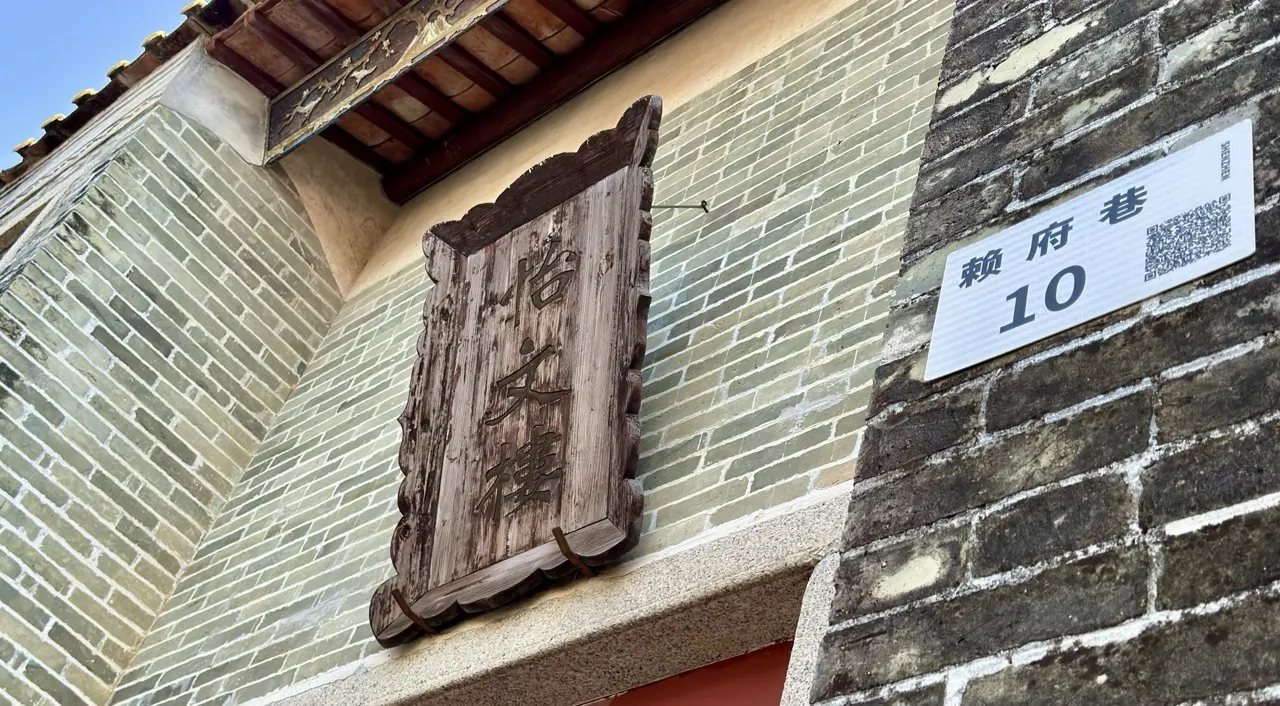
作为鹏城赖氏宗亲会的一员,我们带外地朋友逛大鹏所城,总要穿过南门,拐进赖府巷,在振威将军第斜对面停下脚步。那是一座青砖灰瓦的两层小楼,木窗半开,天井里漏下一格阳光。如今牌子上写着"怡文楼",门口挂着"大鹏自然童书馆"的木牌。可家里的老辈人每次经过,都会轻轻摇头:
"这哪里叫什么怡文楼——这是我们家的裕云楼啊。"
今天,我们想以家族后人的口吻,把这座楼的来龙去脉、委屈与荣光,好好讲一遍。
一、先正名:被粤语念歪了多年的"裕云楼"
家里老人讲,这座楼真正的名字,是裕云楼。
"裕云"二字,是祖上取的堂号,取"裕后光前、云垂家声"之意。在大鹏本地的粤语里,"裕云"(jeoi6 wan4)和后来人写成的"怡文"(ji4 man4)咬字相近,加上清末民初识字的人不多、口耳相传,匾额又在岁月里几经更换,名字就这么一传十、十传百,被写成了"怡文楼"。等到上世纪九十年代文物部门重新挂牌、博物馆立碑时,"怡文楼"三个字已经成了官方记载,我们家族内部虽一直口称"裕云楼",却也没有特意去更正。
这几年宗亲会整理家谱、修缮祖宅,老人们把这桩旧事又提了起来:对外,我们尊重文物部门既有的定名;但对内,我们仍然叫它裕云楼。这是我们家的楼,名字不能再含糊下去。
二、建筑形制:岭南匠意里的一座读书楼
裕云楼坐落在大鹏所城赖府巷10号,建于清道光二十六年(公元1846年),与振威将军第仅数米之隔。整座建筑坐东朝西,面宽23.6米,进深15.3米,占地约360平方米,是典型的清代岭南砖木结构两层建筑。
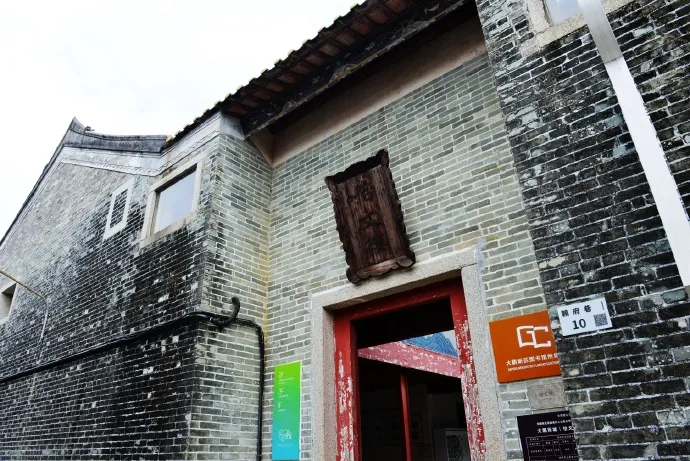
楼体采用两进三开间布局,中央设天井贯通上下,天井两侧各为一厅二间。地面铺大阶砖,墙基以青麻石条垒砌,其上结砌青砖;屋面铺传统堆瓦,硬山顶配船形脊。条石墙裙防潮耐腐,与上部青砖墙形成沉稳的基座感——这是我们岭南工匠的老讲究:下盘稳,上面的梁架才站得住。
天井是这座楼的灵魂。它通风、采光、聚水,雨天四檐之水汇入天井,取"四水归堂"之意。当年赖家的孩童,就是在这天井边,听着雨声、伴着日影,一句一句把《三字经》《千字文》背下来的。
三、真正的女主人:赖恩爵夫人与这座楼
外面的介绍文章,多把这座楼写成"赖恩爵的书房"。这其实只说对了一半。
家里老人口述的版本是:裕云楼从选址、督造到日后延师课子、日常管理,都是赖恩爵的夫人一力操持的。
道光二十六年,正是赖恩爵抗英建功、官封振威将军之后不久。这位将军常年驻守虎门、南澳,军务繁重,家中琐事、子嗣教养,实际上都落在夫人肩上。她眼见将军府里子侄渐多、振威将军第里已腾不出安静读书的地方,便决意于府侧另起一座小楼,专门作家族子弟读书之所。楼既建成,她又亲自过问请哪位先生、束脩几何、孩童几岁开蒙、功课如何考核,事无巨细,一一安排。
楼里原挂"崇兰书室"匾,"崇兰"二字取"君子如兰、崇文尚德"之意——这是我们赖家对读书人的期许。楼前、楼后、天井里,夫人都亲手栽过兰草。可惜这些兰草今已不存,只在老辈人的讲述里,还留着一缕淡淡的香气。
说起来,这也不是偶然。我们赖家从武门起家,却最看重的是"文"字。赖恩爵的祖母刘氏(就是我们尊称"赖太母"的那位),本是书香门第出身,亲手编过蒙学课本,留下"欲知官以尚,时怀读我书"的家训。到了赖恩爵夫人这一代,是把这份祖母传下来的读书家风,用一座实实在在的楼,给安顿了下来。
外面的文章常说"宋有杨家将,清有赖家帮",把我们赖家写成一群横刀立马的武夫。可老人们心里清楚:没有裕云楼里那一盏灯、一位先生、一位主事的夫人,就没有后来"三代五将"里那几个能读兵书、能写奏折、能在海防上拿主意的男人。
四、历史变迁:从家族私塾到粮仓,再到展厅
晚清民国:一族子弟与半城孩童的书声
从道光二十六年落成,到清末民初,裕云楼一直是赖氏家族的私塾。后来名声传出去,所城里其他姓氏的街坊也把孩子送来附读。我们家向来不吝啬,只要肯读、先生也肯收,多摆一张书桌就是了。一时间,小小的天井里,坐的是赖家的子弟,也有邻近的李、张、王姓孩童,琅琅书声穿过巷子,一直飘到城墙根下。
清末废科举、兴学堂,裕云楼也跟着改了些功课:既教传统蒙学,也添了算学、常识。它是那个年代大鹏所城教育转型的一个小小注脚。
解放后:被征用为粮仓,却也因此幸存
1949年以后,裕云楼的命运随时代起伏。它曾被征用为公社粮仓,昔日的书房堆满了麻袋,书香气被稻谷气取代。今天我们回头看,这段"粮仓岁月"其实是不幸中的万幸——正因为有了公家人用,木楼板、砖墙、屋面都被人定期维护着,没有像城里其他一些老宅那样任其倒塌、被人拆砖取木。
2021年大修:古法工艺修我们的祖楼
2021年,裕云楼被纳入大鹏所城整体保护二期工程。宗亲会的几位老人全程参与了意见沟通:青砖风化处用"挖补",木构件腐朽处用"墩接",屋面揭瓦时旧瓦清洗后再用,缺失部分补同形制的青瓦——都是我们老工匠传下来的做法。2023年4月,工程通过广东省文物局组织的专家验收。站在重新上好的船形脊下,老人们说:"这楼,又能再站一百年了。"
五、今日风华:古书房里的新童声
如今走进裕云楼,一层是《鹏城春秋——大鹏所城历史展》,由大鹏新区博物馆策划,分海防历史、人文习俗、鹏城英杰三个板块,展陈35件/套馆藏文物。我们赖家的人每次带朋友来,总要在"鹏城英杰"那一栏多站一会儿——那上面有我们赖恩爵公、赖英扬公、赖信扬公、赖恩锡公的名字。
沿木梯登上二楼,是另一番天地:2021年9月开馆的大鹏自然童书馆。这是全国首个以自然童书为主题的少年儿童阅读空间,按"海洋""森林""陆地"三大主题分色,软包墙上印着清宫鸟谱图,馆藏逾4000册童书,免费向公众开放。
我们这些宗亲会的人,第一次走进去时心里是很复杂的:一方面,自家的祖楼被人用得这么好,孩子们在里面翻书、朗读、趴在地上看绘本,听着真像当年我们子弟在天井里读书的声音;另一方面,又难免感慨——一百七十多年前,赖恩爵夫人一砖一瓦建起来的这座读书楼,最终还是回到了"读书"这件事上,只是今天读书的,是全城、全国的孩子。
这大概就是老人们说的"文气不断"。
六、我们宗亲会的一点心愿
作为鹏城赖氏宗亲会的成员,我们写这篇文章,不是为了争什么、辨什么。
只是想借着这个机会,把家里老人讲过的几桩旧事留下来:
这座楼的本名,叫裕云楼;
它是赖恩爵夫人一力督办、一手管理起来的;
它的功能从来不是"陈列",而是"读书"——从崇兰书室到今天的自然童书馆,这件事已经做了一百八十年。
海风从大鹏湾吹过来,穿过所城的巷道,掠过振威将军第的屋脊,再落到裕云楼的天井里。我们相信,赖恩爵夫人当年若是听见今天二楼孩子们翻书的沙沙声,是会点头的。
楼还在,书声还在。这就够了。
资料来源
大鹏新区政府在线《大鹏所城怡文楼》,大鹏新区旅游发展和文化体育局博物馆,2024年
大鹏新区政府在线《大鹏新区两处国保单位文物维修工程顺利通过省专家现场验收》,2023年
深圳新闻网《175年"古书房"大变身!大鹏自然童书馆开馆啦》,2021年
南粤古驿道网《百年古城——"大鹏所城"》,2017年
南方+《"宋有杨家将,清有赖家帮"——大鹏赖氏三代出五将,爱国家风传承近300年》,2017年
广州日报《千年古城"活进"元宇宙 百年书房"化身"童书馆》,2022年
抖音百科《大鹏所城》词条
鹏城赖氏宗亲会家族口述史:老辈关于"裕云楼"本名、赖恩爵夫人督办建楼的回忆整理
As members of the Pengcheng Lai Clan Association, whenever we show visiting friends around Dapeng Fortress we always walk through the south gate, turn into Lai Mansion Lane, and stop diagonally opposite the Zhenwei General's Mansion. There stands a two-storey building of grey brick and tile, wooden windows half open, a shaft of sunlight falling into its courtyard. The sign today reads "Yiwen Lou", and at the door hangs the board of the "Dapeng Children's Nature Library". Yet every time our elders pass by, they shake their heads gently:
"How is this Yiwen Lou? This is our family's Yuyun Lou."
Today, in the voice of the family's descendants, we want to tell the whole story of this building — its origins, its grievances and its glory.
I. Setting the Record Straight: "Yuyun Lou", Long Mispronounced in Cantonese
Our elders say the building's true name is Yuyun Lou.
"Yuyun" is the hall name chosen by our ancestors, meaning "enriching the descendants and honouring those before, a name that casts the family's renown like a cloud". In the local Cantonese of Dapeng, "Yuyun" (jeoi6 wan4) sounds very close to the later written "Yiwen" (ji4 man4); with few literate people in the late Qing and early Republic and the story passing from mouth to mouth, and the plaque itself replaced several times over the years, the name was written down as "Yiwen Lou". By the 1990s, when the cultural relics authorities re-hung the sign and the museum set up its stele, "Yiwen Lou" had become the official record. Within the family we have always called it Yuyun Lou, but never bothered to correct it.
In recent years, as the clan association compiled the genealogy and repaired the ancestral house, the elders raised this old matter again: outwardly, we respect the name fixed by the cultural relics authorities; but within the family, we still call it Yuyun Lou. This is our family's building — its name must not remain muddled.
II. The Architecture: A Reading Room of Lingnan Craft
Yuyun Lou stands at No. 10 Lai Mansion Lane, Dapeng Fortress. Built in the 26th year of the Daoguang reign (1846), just a few metres from the Zhenwei General's Mansion, the building sits facing west, 23.6 metres wide and 15.3 metres deep, covering about 360 square metres — a typical two-storey Qing-era Lingnan building of brick and timber.
The building has a two-courtyard, three-bay layout, with a central skywell running through both floors, flanked by a hall and two rooms on each side. The floors are paved with large terracotta tiles, the wall base is built of blue granite blocks with blue brick above, and the roof carries traditional stacked tiles — a yingshan gable with a boat-shaped ridge. The stone skirting resists damp and rot, giving a steady base beneath the blue brick walls — an old principle of our Lingnan craftsmen: when the base is steady, the beam frame above will stand.
The skywell is the soul of the building. It ventilates, lights and gathers water; on rainy days the water from all four eaves flows into the courtyard — "four waters returning to the hall". It was here, by this skywell, listening to the rain and the shifting sunlight, that the children of the Lai family recited the Three Character Classic and the Thousand Character Classic, line by line.
III. The True Mistress: General Lai Enjue's Wife and This Building
Outside introductions often describe this building as "Lai Enjue's study". That is only half right.
The version handed down by our elders is this: from choosing the site and supervising the construction to hiring teachers for the children and managing it day to day, Yuyun Lou was run entirely by General Lai Enjue's wife.
The 26th year of Daoguang came soon after Lai Enjue's anti-British feats and his appointment as Zhenwei General. The general was stationed at Humen and Nan'ao, burdened with military affairs; the household matters and the children's education in fact rested on his wife's shoulders. Seeing the general's mansion fill with young clansmen and no quiet place left to study, she resolved to raise a small building beside the mansion solely for the family's children to read in. When it was done, she personally saw to which teacher to engage, what stipend to pay, at what age the children should begin, and how their progress was examined — every detail arranged by her own hand.
The building originally hung the plaque "Chonglan Study" — "chonglan", the orchid, standing for "the gentleman is like the orchid; honour letters and virtue" — our Lai family's hope for its scholars. Before the building, behind it and in the courtyard, the lady planted orchids with her own hands. Sadly none survive; only in the elders' telling does a faint fragrance remain.
Nor was this accidental. Our Lai family rose through the military gate, yet what it prized most was the character "wen" — letters. Lai Enjue's grandmother Liu (the "Lai Tai-mu" we honour) came from a scholarly family, compiled primers with her own hand, and left the family teaching "desire office for the sake of learning; keep the books of our house ever in one's heart". In the generation of Lai Enjue's wife, that reading tradition handed down by the grandmother was settled into an actual building.
Outside writings often say "the Song had its Yang family generals; the Qing had its Lai family legion", painting our Lai family as mere sword-wielding warriors. But the elders know: without that lamp in Yuyun Lou, that teacher, that mistress who ran the place, there would have been none of those men of the "five generals in three generations" who could read military books, write memorials to the throne, and make sound decisions on coastal defence.
IV. The Changing Times: From Family School to Granary to Exhibition Hall
Late Qing and Republic: Reading Voices of a Clan and Half the Town
From its completion in the 26th year of Daoguang to the late Qing and early Republic, Yuyun Lou was the private school of the Lai family. Later its fame spread, and families of other surnames in the fortress sent their children to join. Our family was never stingy: as long as a child was willing to learn and the teacher willing to take them, one more desk was arranged. For a time the little skywell held the sons of the Lai family and also children of the neighbouring Li, Zhang and Wang families; the reading voices drifted down the lane all the way to the foot of the city wall.
When the imperial examinations were abolished and modern schools rose in the late Qing, Yuyun Lou adjusted its curriculum: traditional primers plus arithmetic and general knowledge. It is a small footnote to the educational transformation of Dapeng Fortress in that era.
After Liberation: Requisitioned as a Granary — and Thus Surviving
After 1949 the fate of Yuyun Lou rose and fell with the times. It was requisitioned as a commune granary; the old study was stacked with sacks, the scent of books replaced by the smell of rice. Looking back today, those "granary years" were a blessing in misfortune — precisely because it was in public use, the wooden floors, brick walls and roof were regularly maintained, and the building did not collapse or get picked apart for bricks and timber like other old houses in the city.
The 2021 Restoration: Repairing Our Ancestral Building with Traditional Craft
In 2021 Yuyun Lou was included in Phase II of the overall protection of Dapeng Fortress. Several elders of the clan association took part in the consultations throughout: weathered blue brick was repaired by "digging and patching", rotted timber members by "butt-jointing", the roof tiles removed, cleaned and re-laid, missing pieces replaced with tiles of the same form — all methods handed down by our old craftsmen. In April 2023 the works passed expert acceptance organised by the Guangdong Provincial Cultural Relics Bureau. Standing under the newly restored boat-shaped ridge, the elders said: "This building can stand another hundred years."
V. Today: New Young Voices in the Old Study
Entering Yuyun Lou today, the ground floor holds "Pengcheng Spring and Autumn — The History of Dapeng Fortress", curated by the Dapeng New District Museum in three sections — coastal defence history, local customs, and heroes of Pengcheng — displaying 35 sets of museum relics. Whenever our clansmen bring friends here, we always pause a little longer at the "Heroes of Pengcheng" section — where the names of our Lai Enjue, Lai Yingyang, Lai Xinyang and Lai Enxi appear.
Up the wooden stairs, the second floor is another world: the Dapeng Children's Nature Library, opened in September 2021 — the country's first children's reading space themed on nature books, colour-coded by "ocean", "forest" and "land", with Qing-court bird paintings on the soft walls and a collection of more than 4,000 children's books, free and open to the public.
The first time we of the clan association walked in, our feelings were mixed: on one hand, the family's ancestral building put to such good use — children turning pages, reading aloud, lying on the floor with picture books, sounding just like our own children studying in the skywell long ago; on the other, a quiet sigh — a reading building raised brick by brick by Lai Enjue's wife a hundred and seventy years ago had at last returned to "reading", only now the readers are the children of the whole city, of the whole country.
This, perhaps, is what the elders mean by "the literary spirit never broken".
VI. A Wish from Our Clan Association
As members of the Pengcheng Lai Clan Association, we write this article not to argue or dispute anything.
Only to take this chance to set down a few old stories told by our family elders:
The building's true name is Yuyun Lou;
It was commissioned and managed single-handedly by General Lai Enjue's wife;
Its purpose was never "display" but "reading" — from the Chonglan Study to today's Children's Nature Library, this has been going on for one hundred and eighty years.
The sea wind blows from Dapeng Bay, through the lanes of the fortress, over the roof of the Zhenwei General's Mansion, and down into the skywell of Yuyun Lou. We believe that if Lai Enjue's wife could hear today the rustle of turning pages on the second floor, she would nod.
The building is still here; the reading voices are still here. That is enough.
Sources
大鹏新区政府在线《大鹏所城怡文楼》,大鹏新区旅游发展和文化体育局博物馆,2024年
大鹏新区政府在线《大鹏新区两处国保单位文物维修工程顺利通过省专家现场验收》,2023年
深圳新闻网《175年"古书房"大变身!大鹏自然童书馆开馆啦》,2021年
南粤古驿道网《百年古城——"大鹏所城"》,2017年
南方+《"宋有杨家将,清有赖家帮"——大鹏赖氏三代出五将,爱国家风传承近300年》,2017年
广州日报《千年古城"活进"元宇宙 百年书房"化身"童书馆》,2022年
抖音百科《大鹏所城》词条
鹏城赖氏宗亲会家族口述史:老辈关于"裕云楼"本名、赖恩爵夫人督办建楼的回忆整理